
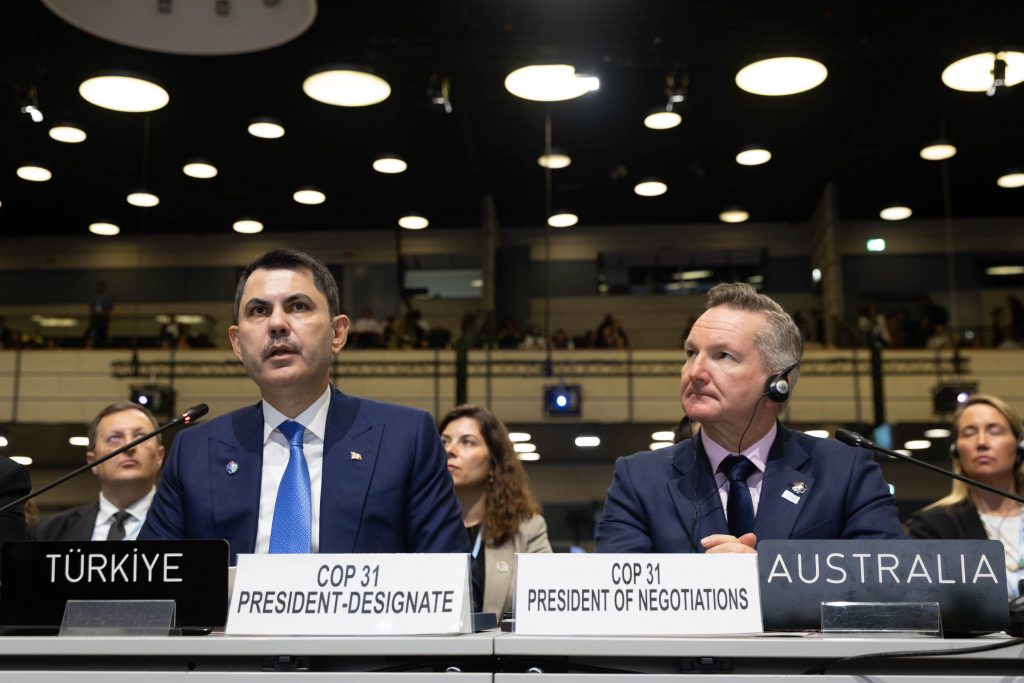
By Sharon Atieno Onyango
The 31st Presidency st The United Nations Climate Change Conference of Parties (COP 31) introduced a fresh worldwide initiative aimed at transitioning away from direct reliance on fossil fuels toward renewable energy within sectors such as construction, transportation, and manufacturing.
Murat Kurum, the designated president of COP31 and Turkey's minister for the environment, urban development, and climate change, suggested a shared international objective aimed at raising the proportion of total energy consumption supplied by electricity—from slightly above 20% currently to 35% by 2035. Additionally, he pledged to establish an international alliance focused on taking steps toward meeting this aim.
The objective stems from an assessment conducted by the International Energy Agency (IEA) and the International Renewable Energy Agency (IRENA), aiming to facilitate the execution of the Paris Agreement and ensure global efforts remain aligned with keeping temperature increases below 1.5°C compared to pre-industrial times.
Kurum addressed representatives at the Bonn Climate Change Conference. The event, scheduled for 8–18 June 2026, serves as a yearly gathering of officials from countries involved in the UN Framework Convention on Climate Change (UNFCCC) and acts as a lead-up to the annual COP conference, set to occur in Antalya, Turkey, later this November.
"By integrating electricity into everyday activities—such as transportation, structures, and manufacturing—we can shield households and companies from unpredictable energy prices. The '35% by 2035' goal will serve as a key focus during our leadership at COP31. As we approach COP31 in Antalya, we aim to unite an influential international alliance prepared and committed to advancing this initiative," he stated.
We acknowledge that this is an international objective, recognizing that nations begin from varied positions and may follow distinct routes. We will collaborate closely with every country, particularly those in developing regions, to assist in providing technological guidance, development programs, and monetary aid aligned with this aim.
On 9 June, the Presidency presented its Action Plan, highlighting practical choices that will influence the transformation: households opting for electric cars and devices, companies funding electric manufacturing methods, municipalities upgrading transportation networks with electricity, and property managers setting up solar panels, storage units, and heating systems.
He pointed out that the shift to electric power needs to go hand-in-hand with broader initiatives aimed at moving away from coal, oil, and natural gas in energy sources, boosting production of clean energy, reinforcing electrical networks and storage capabilities, as well as improving energy availability and providing monetary assistance to less developed nations.
As stated by Simon Stiell, the Executive Secretary of the UNFCCC, the expansion of electricity access has already triggered a worldwide increase in renewable power, boosting economic development and employment opportunities. Transforming the global economy is essential to reduce reliance on fossil fuels, lower energy expenses, and enhance energy stability.
"It's now essential to accelerate and expand the shift toward electric systems, as the ongoing high costs of fossil fuels have become extremely evident. Similarly, building stronger, more energy-efficient urban areas and reducing waste are crucial for addressing the climate crisis, which is impacting all economies and global supply networks, contributing to rising inflation," he stated.
The leadership of Brazil at COP30 aligned the Action Agenda with the findings from the initial Global Stocktake, establishing six key themes—and the upcoming Turkish administration, collaborating with Australia, deserves recognition for continuing this advancement.
To back the goals for electric vehicle adoption, the COP31 Chairmanship, along with Australia, has tasked the IEA with producing specific reports that outline routes to meet the "35×35" objective and evaluate the advantages of reducing waste increase and enhancing recycling-based waste handling systems. This comes after the COP31 Chairmanship's ongoing collaboration with IRENA to explore ways electrification can speed up the shift from oil-based energy sources.
"Speeding up the shift towards cleaner energy can reduce disruptions in our power networks, offer greater protection to our economic structures and families against expensive energy prices, and aid in continuing to lower emission levels. This is why transitioning the world's economy to electricity is among our key focuses at COP31—because it offers the quickest method to enhance energy safety, decrease pollution, and reduce expenses," stated Hon. Chris Bowen MP – Australia's Minister for Climate Change and Energy and Head of Negotiations for COP31.
The updated objective follows a set of related commitments made during earlier environmental summits. During COP28, nations committed to striving to triple renewable power generation and move away from oil-based resources.
During COP29, nations and key players endorsed initiatives aimed at increasing energy storage capabilities and upgrading power networks, subsequently establishing a goal of securing over $300 billion annually by 2035 to support actions in emerging economies.
The leadership of COP31 emphasized that setting an electrification goal represents the following necessary stage in this worldwide framework for shifting towards cleaner energy, as it aids in transforming these pledges into actual shifts in energy usage throughout the economy.
The leadership of COP31 acknowledged that various nations and industries will take distinct routes based on their specific situations. Consequently, the COP31 Action Plan will unite governments, companies, banking entities, municipalities, and non-governmental organizations to speed up the execution of real-world climate initiatives parallel to the official negotiation procedures. This initiative seeks to create an enduring impact that will carry forward at COP32 held in Ethiopia and subsequently to achieve these goals by 2035.