
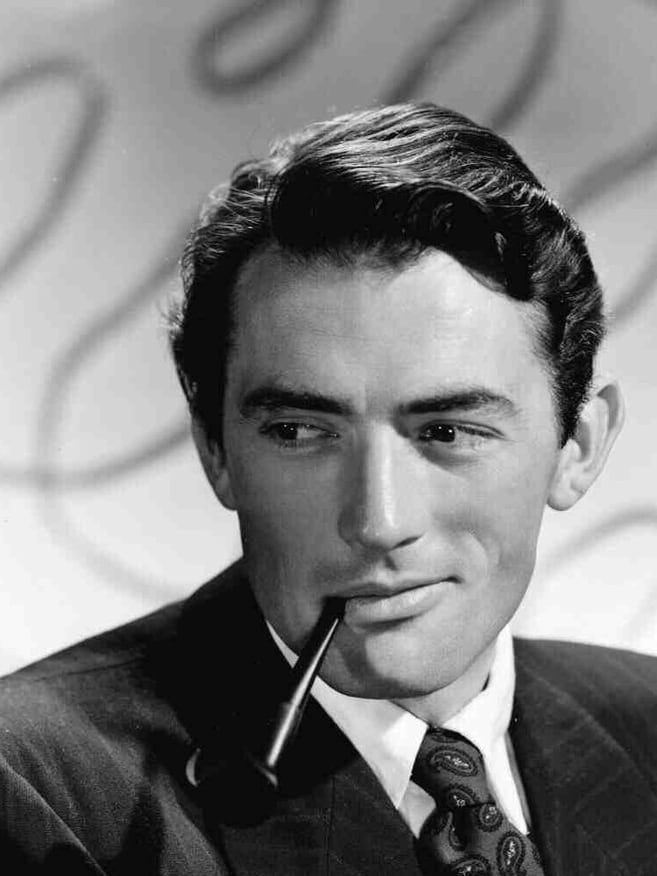
"The location known as Porkchop Hill witnessed intense fighting throughout the Korean War. At that time, Captain Clemons served as a lieutenant leading the assault there. A movie adaptation of this battle is currently being developed, with Gregory Peck set to portray Captain Clemons." (Evening edition, May 31, 1958, page 4)
Renowned American actor Gregory Peck (1916–2003) played the main role in the movie 'Porkchop Hill', portraying events from the Korean War. Information about the film's development in 1958 also spread to South Korea.
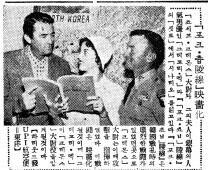
"The location known as Porkchop Hill witnessed intense fighting throughout the Korean War. At that time, Captain Clemons served as a lieutenant leading the assault there. A movie adaptation of this battle is currently being developed, with Gregory Peck set to portray Captain Clemons." (Evening edition, May 31, 1958, page 4)
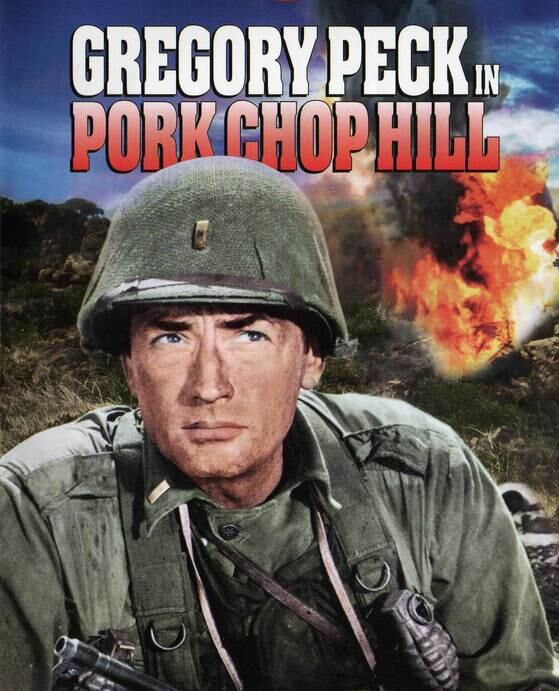
The film 'Porkchop Hill' portrays a conflict that occurred atop a 255-meter-tall elevation within the Demilitarized Zone near Yeoncheon, Gyeonggi Province. The American armed forces named it 'Porkchop Hill' due to its shape resembling a pork chop. Between July 6, 1953, amid ongoing ceasefire talks, United Nations and Chinese troops clashed intensely over this location. An official directive mandated the regaining of the hill at any cost. This strategic move aimed to showcase the strength of the US military capabilities and secure a favorable position during the concluding peace discussions. A group of 135 soldiers under the command of Lieutenant Clemons battled vigorously against enemy forces and eventually reclaimed the hill.
The movie was helmed by Lewis Milestone, the filmmaker known for 'All Quiet on the Western Front' (1930). A comprehensive film critique appeared around that period.
"This piece effectively 'brings humanity' to warfare by blending an honest depiction of the harsh, torturous conflict without overstatement alongside the mental exploration of troops approaching a critical engagement as an armistice appeared likely. This is a compelling read due to its authenticity, devoid of a typical storyline." (May 31, 1959, evening edition, page 4)
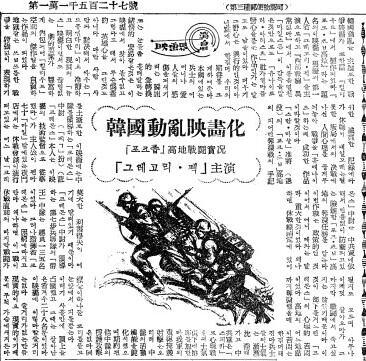
Lieutenant Clemons, portrayed by Gregory Peck, faces internal conflict. To what extent should his unit engage in a fight that might be the final one of the Korean War, considering the significant costs involved?
This presented the mental conflict encountered by Clemons, who commanded his team. This challenge became even more intense when they regained control of specific positions on the hill. Soldiers' spirits slowly dropped, and Chinese troops employed psychological tactics using 'speakers' to lower their confidence further. The Allies' powerful gunfire hindered the squad's movement, and expected help from different groups failed to arrive. Friends kept dying right before him.
The losses were significant. Although they took the hill within three days, just 25 people survived.
"This movie lacks a traditional storyline. The absence of a plot contributes to its authenticity, which in turn makes it profoundly emotional. 'Triumph is delicate, and history continues beyond the twentieth century. However, those who battled here fully understand their actions.' Using this quiet, spoken narration, 'Porkchop Hill' comes to an end." (Evening edition, May 31, 1959, page 4)
There is no documentation available regarding the film's local premiere in South Korea. The article solely states that it was released on May 29, 1959, by the U.S. 7th Infantry Division based in South Korea.

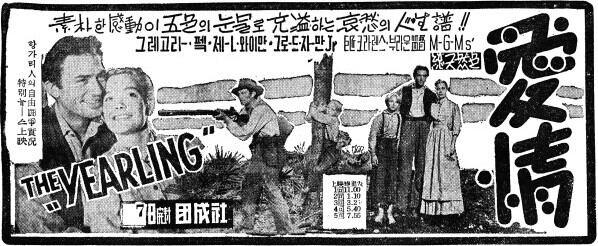
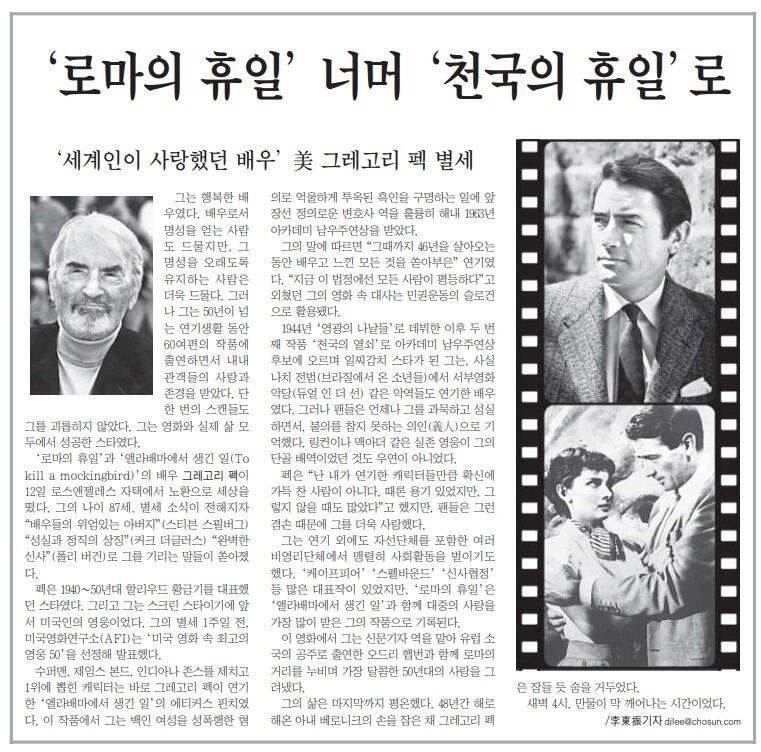
During the 1950s and 1960s, Gregory Peck gained significant recognition in South Korea as an emblematic figure from Hollywood. He was referred to as "the top male actor" according to a headline in the May 31, 1959, evening issue on page 4. More than ten of his movies, such as 'Roman Holiday' (1955), 'Love Is a Many-Splendored Thing' (1956), 'Designing Woman' (1957), 'The Big Country' (1958), 'The Bravados' (1958), 'On the Beach' (1959), 'The Bramble Bush' (1960), 'The Chapman Report' (1961), 'The Big Country' (1963), 'The African Queen' (1963), and 'Arabesque' (1968), were shown at cinemas across Korea.
He received the 1963 Oscar for Best Actor for his role in 'To Kill a Mockingbird.' He portrayed Atticus Finch, an attorney who defends a wrongly convicted African American man charged with assaulting a young Caucasian woman. In South Korea, the film was titled 'What Happened in Alabama.'
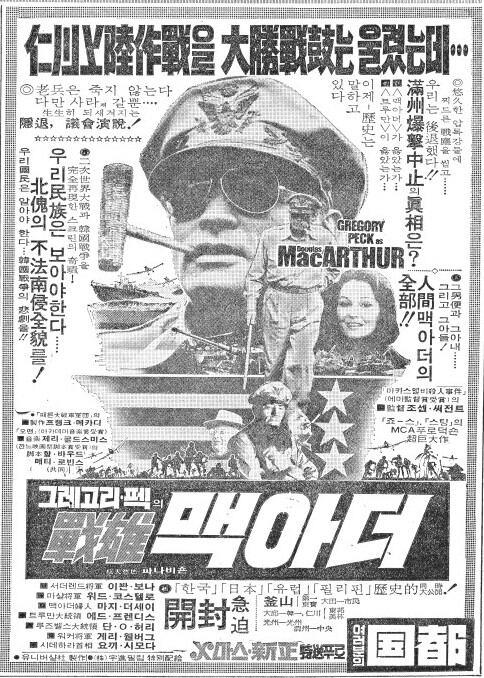
In 1977, he appeared in yet another movie connected with the Korean War. In 'MacArthur,' he played General Douglas MacArthur.
"A biographical movie titled 'War Hero MacArthur,' showcasing General MacArthur—who is revered as a war hero from World War II and known for the Incheon Landing during the Korean War, an event deeply remembered by Koreans—is being brought in and will be released as a New Year's feature. (...) Gregory Peck, who portrays the lead character of MacArthur, received praise for his intense portrayal of both a military officer and public speaker. The film, directed by Joseph Sargent, features a 40-minute depiction of the Incheon Landing, likely stirring sentimental memories among Koreans." (December 11, 1977, page 5)
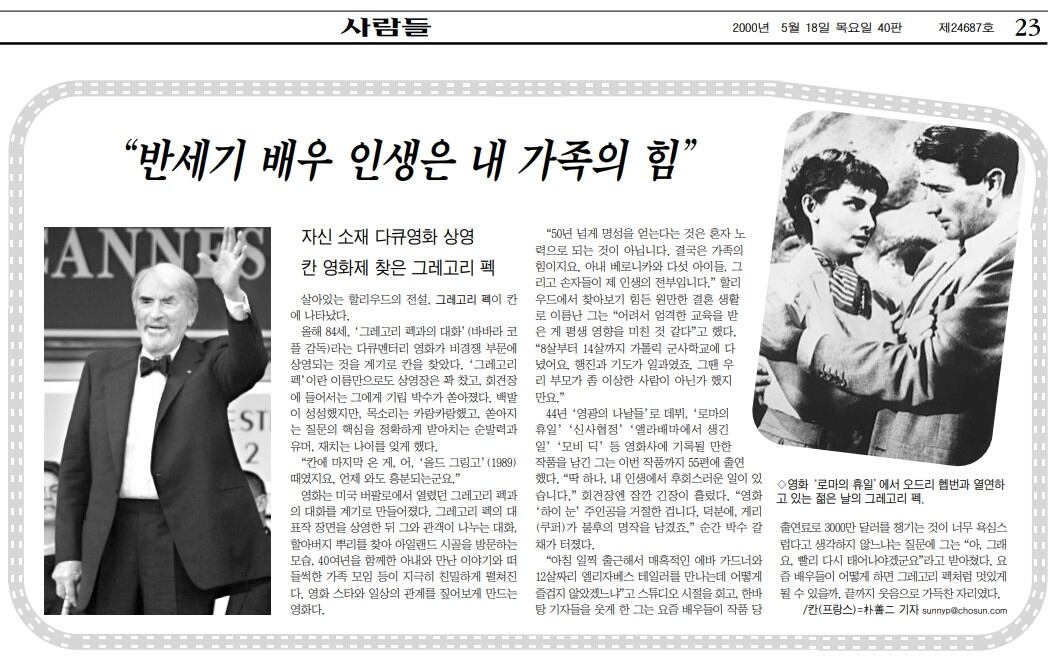
Gregory Peck starred in more than 60 movies during his lifetime. In 2000, when he was 84 years old, he participated in the Cannes Film Festival and remarked, "Sustaining recognition for more than half a century isn’t something you accomplish on your own. It's all about family strength. My wife Veronica, our five kids, and grandkids mean everything to me" (May 18, 2000, p. 23).