
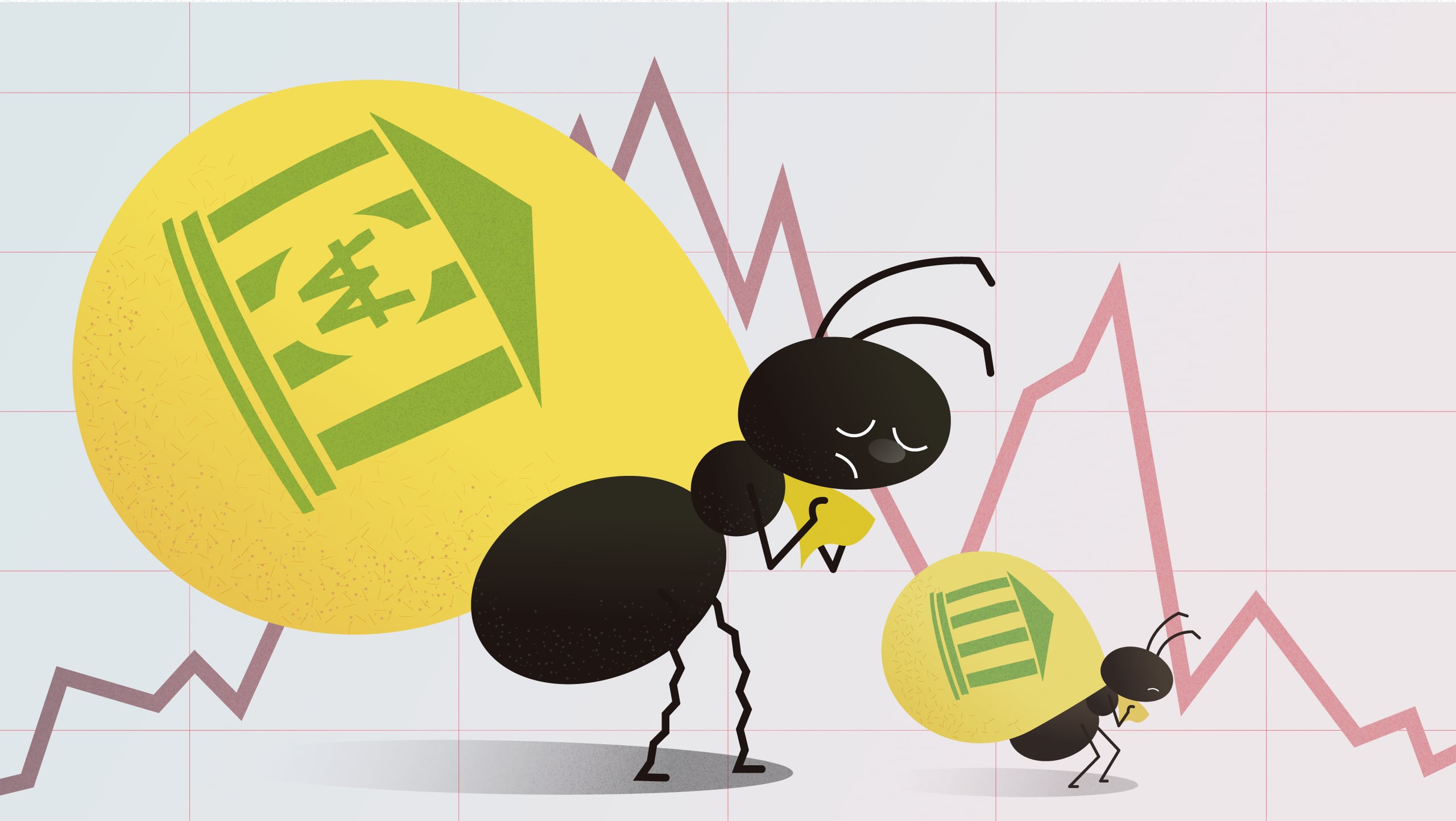
Just last month, 31-year-old office employee Lee Mo, previously deeply involved in day trading, has now ceased investing in stocks. Lee mentioned, "I used to make between five to six trades each week, but with the KOSPI swinging by 8% both ways this month, I've only been observing the stock market," he added, "I intend to resume trading after significant economic developments such as the SpaceX IPO and important nations' central bank interest rate announcements."
Lately, with the KOSPI experiencing frequent ups and downs, forming what is known as a 'volatility-driven market,' uncertainty among retail investors has increased. The extreme fluctuation in the KOSPI has resulted in scenarios where substantial gains may quickly become losses overnight, making investment more challenging. Moreover, risky financial instruments such as 'single-stock leveraged ETFs'—which mirror the movements of an individual stock at twice the speed—are becoming increasingly popular, intensifying investor grievances, as per recent studies.
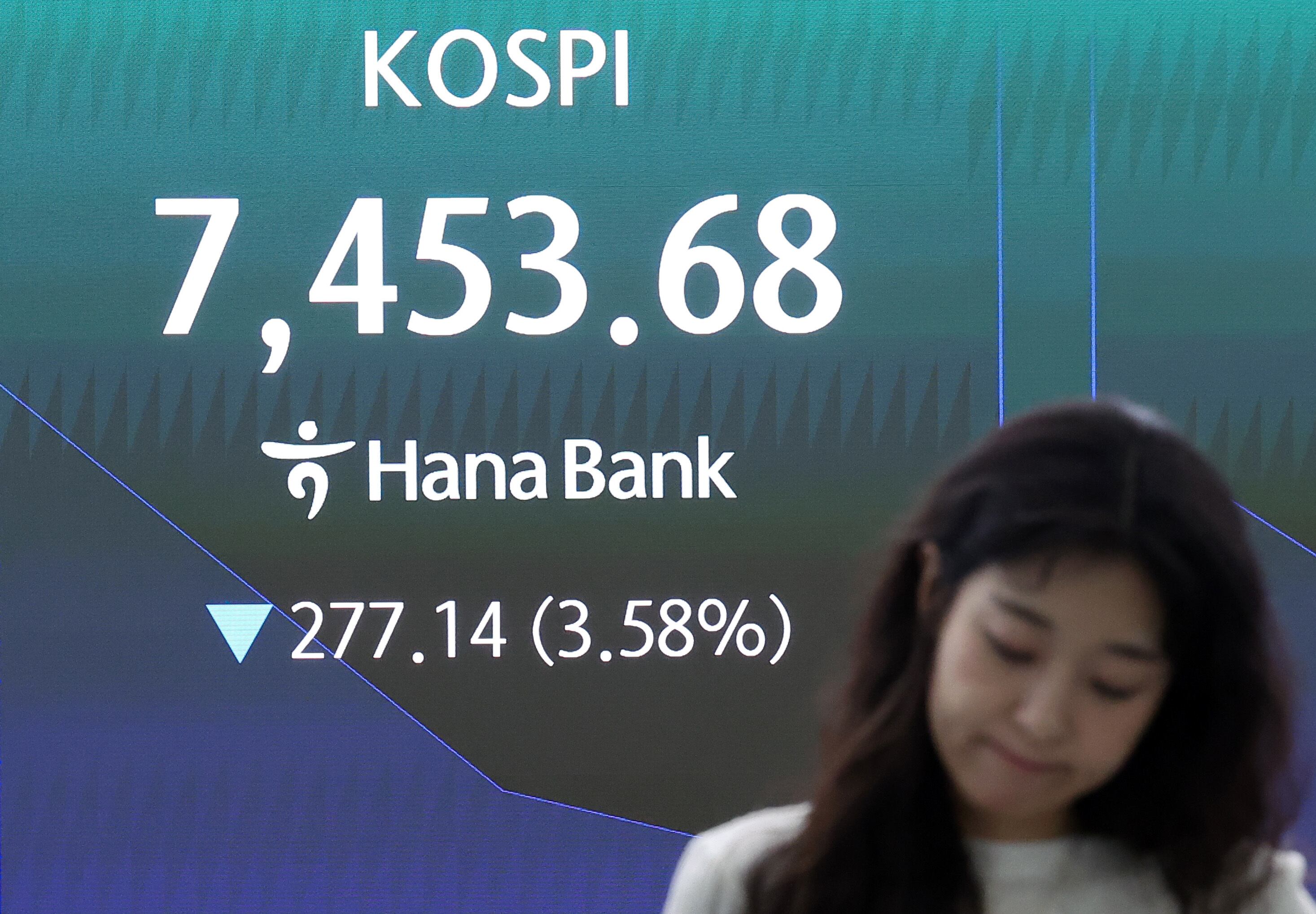
◇KOSPI Loses 1,000 Points Over 6 Sessions
The KOSPI experienced significant fluctuations this month. On the 2nd, the index broke above 8,800 for the first time ever. During that period, confidence grew within the financial sector, with expectations that reaching 10,000 was imminent; however, it dropped into the 7,400 area following declines of -1.84% on the 4th, -5.54% on the 5th, and -8.29% on the 8th. On the 9th, it turned around sharply, increasing by 8.18% in one day, only to fall again by 4.52% on the 10th. Despite rising 0.43% on the 11th and entering a stabilization stage, concerns among investors about the unstable market have increased.
The KOSPI 200 Volatility Index (VKOSPI), known as the 'Korean version of the fear index,' has risen to levels observed during the financial crisis. As reported by Investing.com on the 12th, the VKOSPI reached 91.23 on the 9th, exceeding the prior peak of 89.3 recorded during the 2008 economic downturn. This indicator is regarded as being in the 'high anxiety' range once it goes beyond 50.
Han Mo, aged 41, residing in Hanam City, Gyeonggi Province, stated, "In March, there was a distinct negative element—namely, the conflict between the United States and Iran—but currently, numerous people believe that the KOSPI has increased significantly relative to global markets and is experiencing a correction." He further mentioned, "There are various factors contributing to its increase, but equally strong reasons could lead to a decline; thus, I'm simply keeping my stocks." Indeed, with ongoing volatile market situations, many investors similar to Mr. Han remain hesitant about making trades. As per data from the Korea Exchange, the average daily trading volume of the KOSPI from the start of this month up to the 11th reached 505.1 million shares. This represents a significant drop of 28.4% when contrasted with last month's average of 698.79 million shares. Regarding transaction values, around 74 trillion South Korean won and 69 trillion South Korean won were noted on the 1st and 2nd respectively, after which it stayed within the range of 39 trillion to 47 trillion South Korean won from the 4th through the 11th. Analysts suggest that growing investor exhaustion is leading more individuals to adopt a cautious approach.
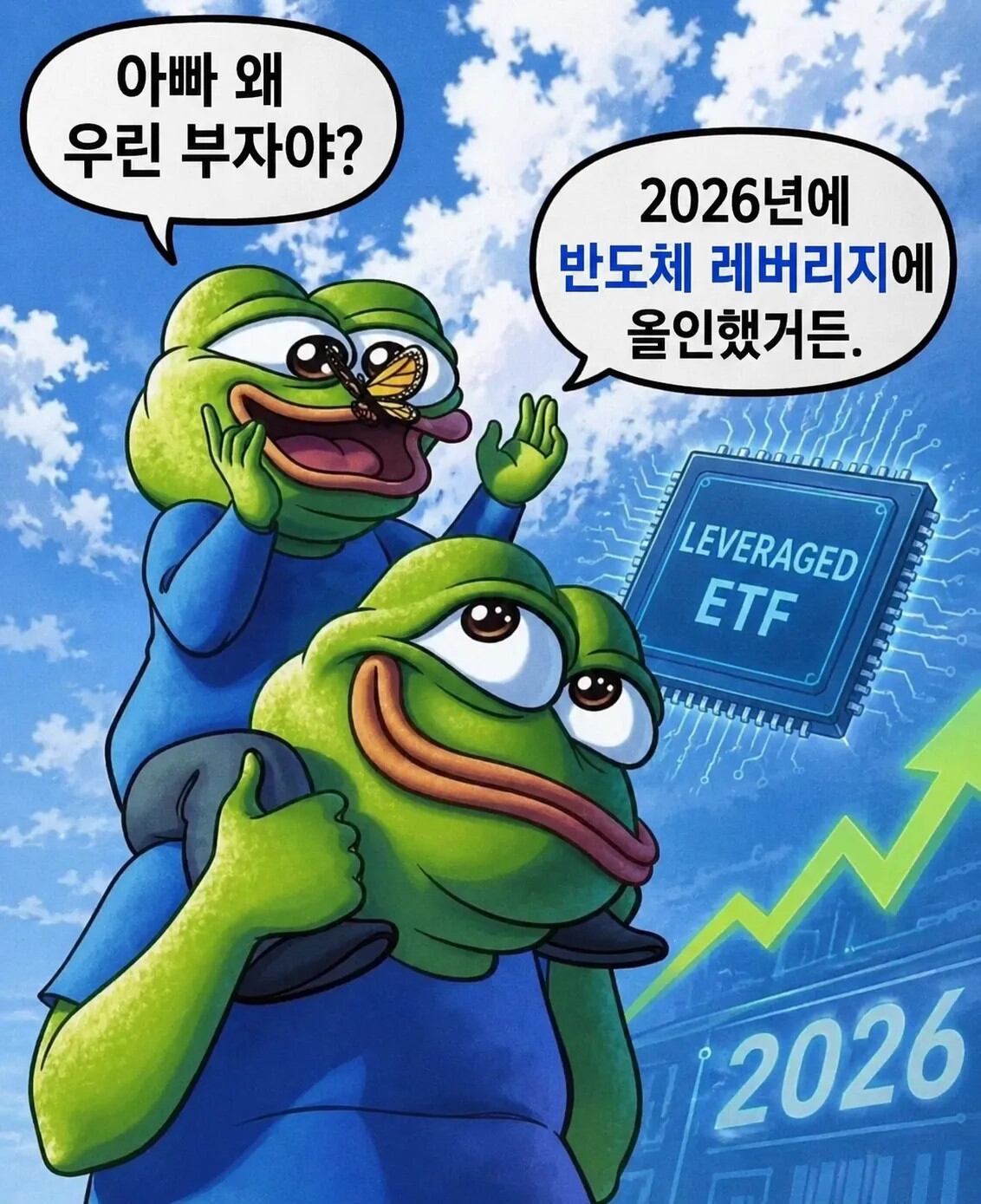
◇ Increasing Voices of Debt-Driven Investment Among Individual Investors
Investors who purchased newly introduced single-stock leveraged exchange-traded funds (ETFs) are showing signs of concern. Yoo Mo, a 31-year-old resident of Dongdaemun District in Seoul, stated, "I began investing in stocks later than others and withdrew all the money from my savings account earlier this month to buy the SK Hynix 2x ETF, but the returns are currently around -24%." He further mentioned, "Once I get back my initial investment, I intend to sell right away." The problem lies in the fact that many investors have been rushing into these single-stock leveraged financial instruments. As per data from ETF Check, up until the 11th, single-stock leveraged products linked to Samsung Electronics and SK Hynix filled four out of the top five positions regarding net inflows during the previous week. The leading fund, KODEX SK Hynix Single-Stock Leveraged, recorded net inflows amounting to 1.2208 trillion South Korean won, followed closely by KODEX Samsung Electronics Single-Stock Leveraged with net inflows reaching 1 trillion South Korean won. Han Ji-young, an analyst at Kiwoom Securities, shared with Herald Economy, "The VKOSPI index, reflecting expected volatility of the KOSPI 200, reached a new peak of 91 points," noting, "Given that leveraged ETF investments are mainly focused on major semiconductor companies, heightened market fluctuations might persist for some time."
In such circumstances, "debt-driven investments" — which involve using borrowed funds for investing — have reached an all-time high. The Korea Financial Investment Association reported that the total amount of domestic credit-based loan transactions surpassed 39 trillion South Korean won for the first time on the 29th of last month. By the 11th, it was still close to that peak level, standing at 36.7736 trillion South Korean won. With markets experiencing volatility due to the sharp rise in these types of investments, the value of reverse deals from unfulfilled trades exceeded 100 billion South Korean won for three consecutive business days on the 5th, 8th, and 9th. This marks the first occurrence of such a trend since October 2023.