
On Monday, Benjamin Netanyahu stated that Israel's latest operations against Iran achieved their objective of preventing further assaults from Teheran, with fighting between the two nations now largely ceased.
"At this point, the fighting on that front has been controlled — following our strike against the terrorist government in Tehran, they ceased their attacks on us," Netanyahu stated in a TV address.
He stated that Israel would react strongly if circumstances shifted, cautioning that if Iran "makes the error of restarting assaults on us, we will retaliate with complete strength."
Previously, in his initial remarks following the exchange of attacks between Iran and Israel, U.S. President Donald Trump posted online: "Israel and Iran should cease firing immediately."
A statement made by Trump on Truth Social follows Iran attributing responsibility to the United States for the renewed conflict with Israel, arguing that Israel's activities "are not distinct" from U.S. policies.
"Certainly, as I mentioned earlier, the activities of the Zionist government in the area are closely linked with American policies," stated Foreign Ministry spokesperson Esmaeil Baqaei during a news briefing in Tehran.
"Nobody thinks the Zionist government would take any step without previous agreement and collaboration with the United States," he said, as Israel cautioned that a third wave of missiles was heading from Iran on Monday.
The Israeli Defense Forces (IDF) announced on Telegram that they were getting ready to "intercept the danger" following multiple waves of Iranian missiles striking the nation.
Previously, AFP reporters mentioned they heard at least eight blasts above Jerusalem where Israeli troops attempted to stop the second group of approaching rockets.
Israel carried out air strikes targeting central and western parts of Iran at the start of Monday, reacting to missile launches originating from Tehran. This marks the first such attack since the April ceasefire was established in the ongoing conflict in the Middle East.
"Several hours ago, hundreds of Israeli Air Force fighter planes, guided by the IDF Intelligence Directorate, carried out an extensive attack on key defense infrastructure linked to the Iranian militant group," the IDF shared on social media at 9:54 am CET.
"Those attacks also boost the Israeli Air Force's ability to operate within Iranian territory," the post added.
State-run Iranian TV mentioned hearing explosion sounds in Isfahan, Karaj, Tabriz, and Tehran, but did not provide further details right away.
The Iranian authorities shut down the airspace near Tehran's Imam Khomeini International Airport, which serves as the nation's primary aviation hub, following an Israeli strike.
The Israeli defense forces released a declaration when the attacks began: "Shortly before, the Israeli Air Force targeted facilities of the Iranian extremist group in western and central Iran."
Previously, Israel stated that its air defenses were shooting down Iranian missiles following Tehran's warning that it would strike Israel in retaliation for Israeli attacks on Beirut.
The Iranian Revolutionary Guard referred to the assault as a "cautionary message" following an Israeli strike on the southern districts of Beirut later in the morning, vowing broader attacks should hostilities continue.
"Alarms were activated in multiple regions throughout the nation, after rockets were detected being fired from Iran towards the State of Israel," the armed forces stated in a press release.
Israel claimed that Tehran made a "serious error" through its attack, which the Israeli defense forces stated involved 11 missiles, none of which succeeded, and resulted in no injuries.
Senior Israeli army officer Lieutenant General Eyal Zamir promised that the armed forces would "attack the adversary strongly once permission is granted."
The Islamic Revolutionary Guards Corps stated through Iranian media that they launched ballistic missiles toward "Ramat David Airbase," which serves as the origin of aggressive actions targeting "oppressed civilians" in Lebanon.
Teheran has stated that any agreement aimed at ending the war for good should also put an end to the related conflict in Lebanon, where Israel is conducting operations against the Iranian-supported group Hezbollah. It has also cautioned that any fresh strikes on Beirut could lead to a complete renewal of fighting.
The Iranian Revolutionary Guard stated previously that it was prepared to initiate an assault against Israel, following reports that Iran's Supreme Leader, Mojtaba Khamenei, had approved the strike as retaliation for Israeli attacks on Beirut, according to a report from Iranian state television.
Iran claims Israel has exceeded "all red lines"
A series of attacks from Iran allegedly led U.S. President Donald Trump to contact Israeli Prime Minister Benjamin Netanyahu, urging him not to respond with counterattacks, despite statements from Israeli defense officials promising to launch strikes once authorized.
"Right now, I'm about to call Bibi and instruct him not to take revenge," Trump reportedly said during a phone conversation with Axios reporter Barak Ravid, referring to the Israeli leader by his informal name.
"Israel conducted its attack and Iran carried out its strike. We don't require another one," Trump was reported to have stated.
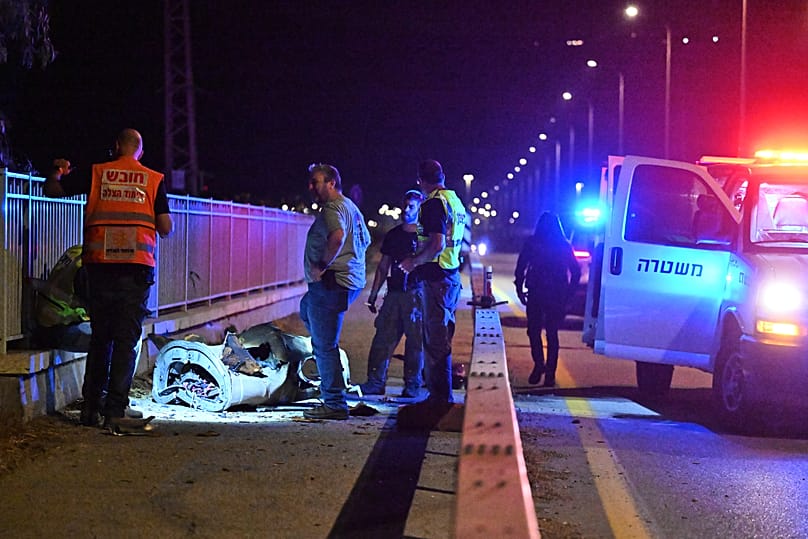
An official from Iran's Khatam al-Anbiya, which oversees missile-related activities, stated that Israel has violated "every boundary" by targeting Beirut and expanding its operations in south Lebanon, as reported by the Iranian news outlet Tasnim.
We had earlier cautioned that should criminal activity spread within the suburbs of Beirut, we would target locations in the occupied areas," stated an Iranian military announcement, which also noted that Israel "needs to cease its assaults on southern Lebanon and the suburbs; otherwise, if it escalates these strikes into that area or retaliates against our measures, it will encounter further severe and unfortunate consequences, with devastating attacks beginning against the government and its allies.
For several days, talks between Iran and the U.S. regarding the unstable truce in the conflict remained frozen due to clashes between Israel and the Lebanese Shia group Hezbollah. Israel currently controls southern Lebanon and has advanced into regions it hasn’t controlled for 25 years—raising concerns about an expansion of their operations.