
On the 12th, I went to the recently constructed large residential development called 'Singyeomdan Royal Park City II' located in Wanggil-dong, Seo-gu, Incheon, home to 1,500 families. Locating the main entrance proved challenging. I thought, "This must be the entryway," and moved forward, only to see an unending line of marble columns making up the gateway. It took almost five minutes to travel from where the columned gates began near the community center entrance all the way to the far end of the shopping district across the street. These gate columns stretch for 330 meters, making them the longest in the nation.
◇ Columnar Entrances Imitating Fortress Doors, Eliciting an Unsettling Feeling
DK Asia, the company behind the transformation of the region into a luxury destination, finished constructing the gateway pillars last year, saying, "They aren’t merely entry points; rather, they represent the elegance of an upscale resort city right at the doorstep." They further mentioned, "For locals, these features will instill a sense of accomplishment, while for visitors, they serve as a powerful emblem showcasing our core values."
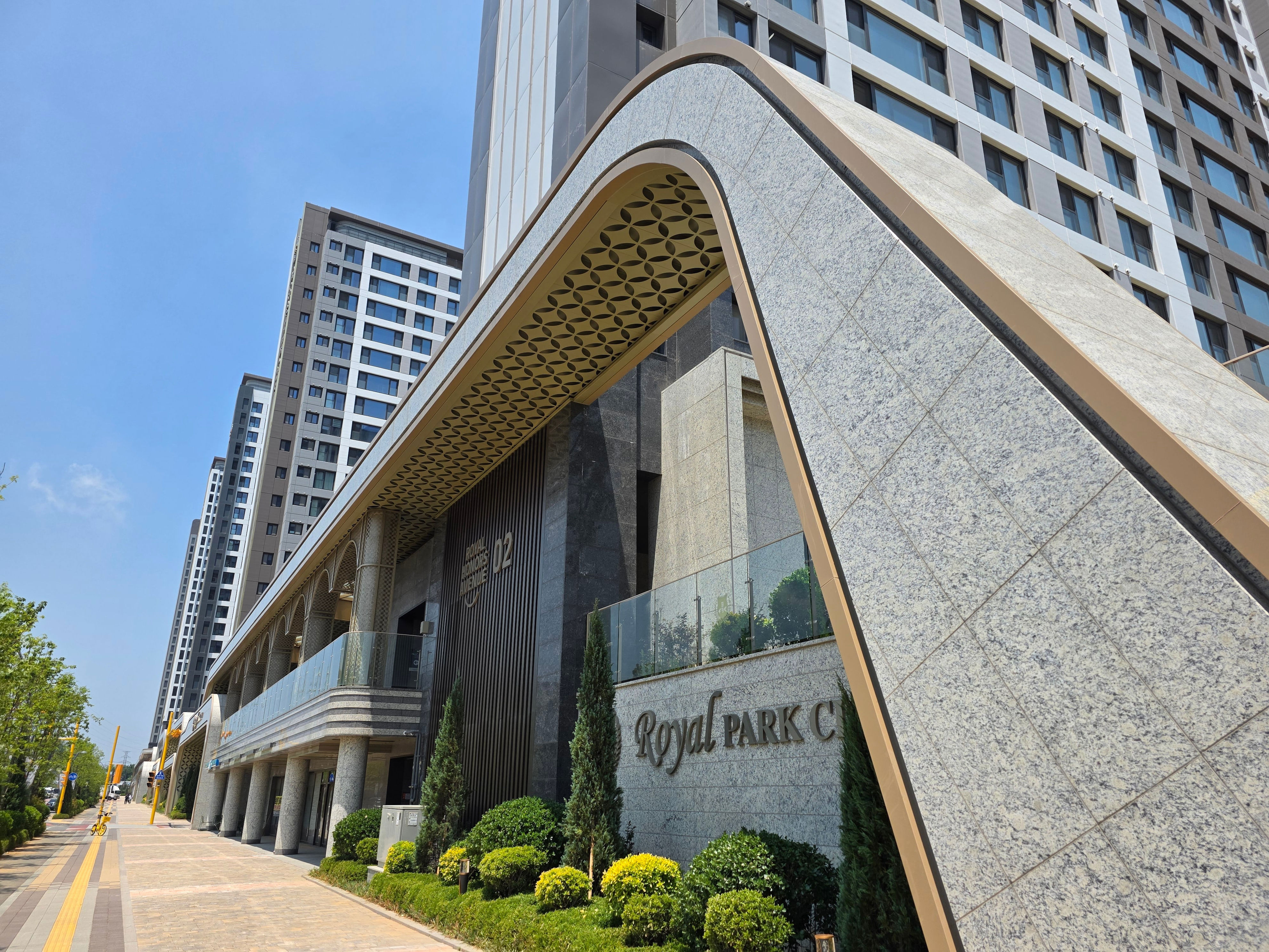
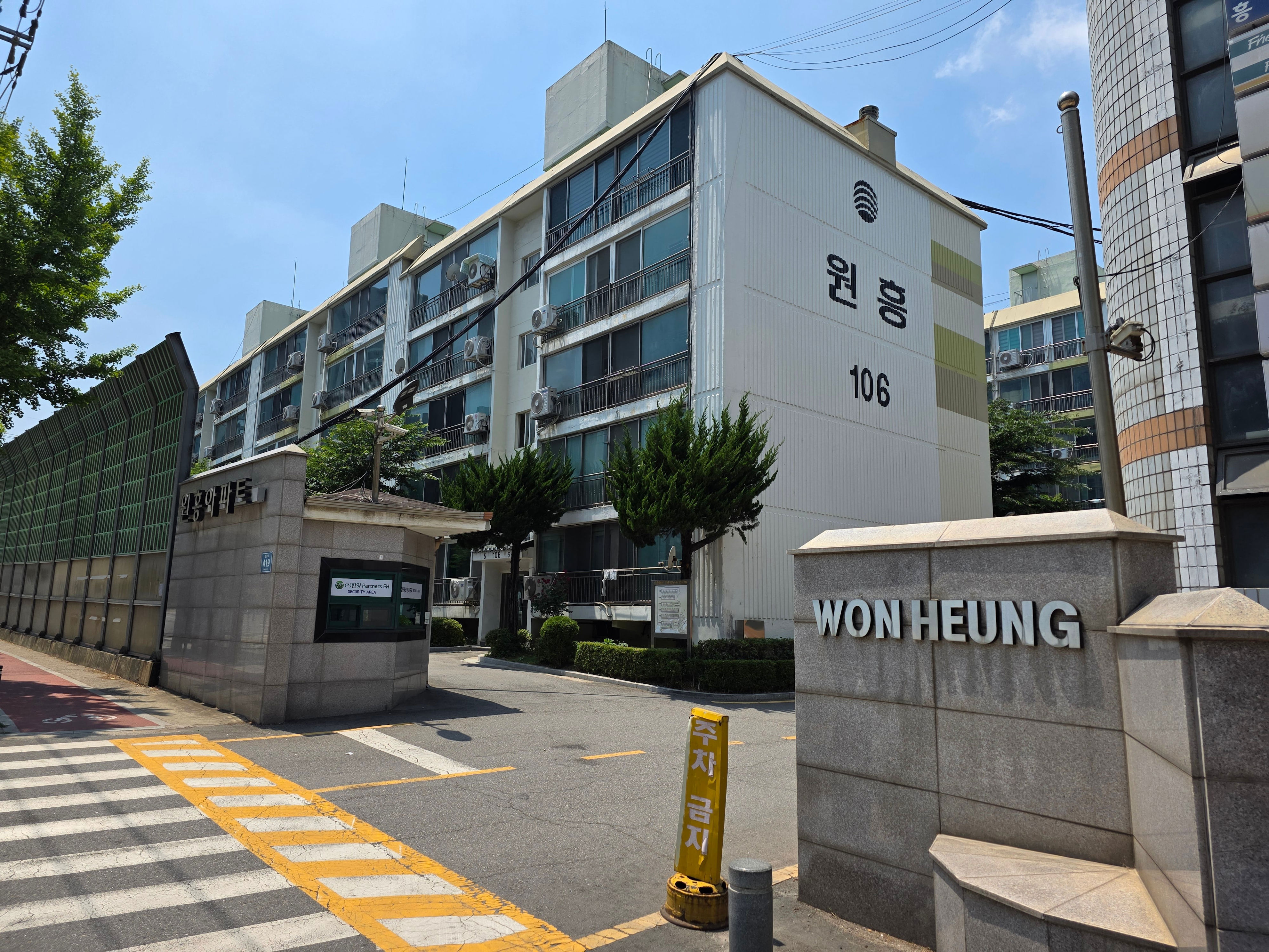
Previously, gate pillars served only as markers at the entry of a building complex, displaying names like "○○ Apartment." Today, however, these gate pillars resemble those of castles rather than regular entrances. They are growing larger and more elaborate.
◇ Raemian, Xi, and Others Take the Initiative ... 'Signage for Residential Buildings'
The rivalry over gate pillars increased as branded residential buildings gained popularity. In the early 2000s, the introduction of branded residences such as RAEMIAN and Xi by leading construction firms changed complex entries from basic signs into the identity of the building. With the expansion of renovation and rebuilding sectors, gate pillars evolved into advertising spaces showcasing brands and becoming a source of prestige for residents' groups. Today, to stand out, these structures feature water walls (water features resembling waterfalls) and digital façades.
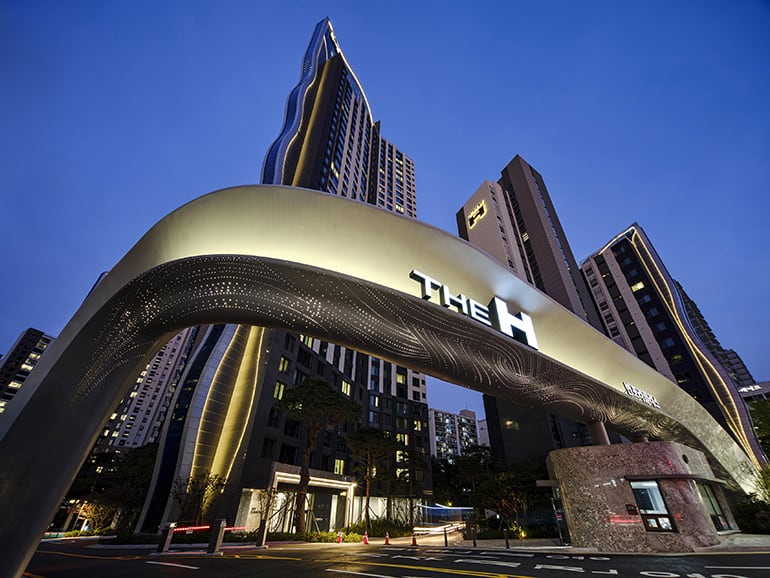
The rivalry among entrance pillars began with residential buildings in the Gangnam district of Seoul. The entrance pillars at D'Le Towers Raemian in Banpo, which were constructed using the remnants of the previous Samho Garden Mansion 3rd Complex, consist of 16 massive metal frameworks and more than 2,400 stainless steel panels. These structures incorporate around 10,000 LED lights. Meanwhile, the entrance pillars at Banpo Ruel, built from the remains of the Banpo Woosung Apartments, measure roughly 100 meters in length. Entrance pillars designed specifically for this purpose have now become an established architectural element, not just within major cities but also in newer developments across various regions.
◇ 100-meter gate columns ... Banpo's 'Banpo Ruel'
The expenses are considerable as well. Industry reports indicate that gate pillars in newly constructed facilities typically range from hundreds of millions of won, but in renovation projects featuring customized designs, they can exceed several billion won because of additional components such as steel frameworks, distinctive stone finishes, illumination systems, waterfall features, and digital façades. Partnerships with internationally acclaimed architects or design companies are also becoming more common.
Although the rivalry over entrance pillars increases building expenses, many members of the renovation associations and homebuyers appreciate "luxurious entrance pillars." As hundreds to thousands of families split the expense, the financial impact on each person remains minimal. For future occupants, these structures represent indicators of the community's status, while for developers, they act as promotional elements designed to attract buyer interest.
The distinct cultural approach of South Korea towards extensive housing developments also contributes significantly. In nations such as Japan, individual apartment blocks or small complexes consisting of one or two buildings are typical. However, in South Korea, the primary model of residence involves expansive complexes where hundreds or even thousands of families reside collectively. This setup allows many households to divide expenses more effectively, and there tends to be strong interest in iconic constructions that reflect the group's character.
◇ "Too Many Entrance Pillars Leading to Isolation from Nearby Zones" ... Seocho-gu Asks for Review
Not every perspective regarding the large gateway pillars is favorable. That same afternoon, I toured the D'Le Towers Bangbae development project located in Bangbae-dong, Seocho-gu, Seoul. With an occupancy date set for this September, landscape design and completion of the entrance pillars were underway. The gateway structures seen through the construction barriers have sparked debate between Seoul City, the Seocho District Office, and the residents' association.
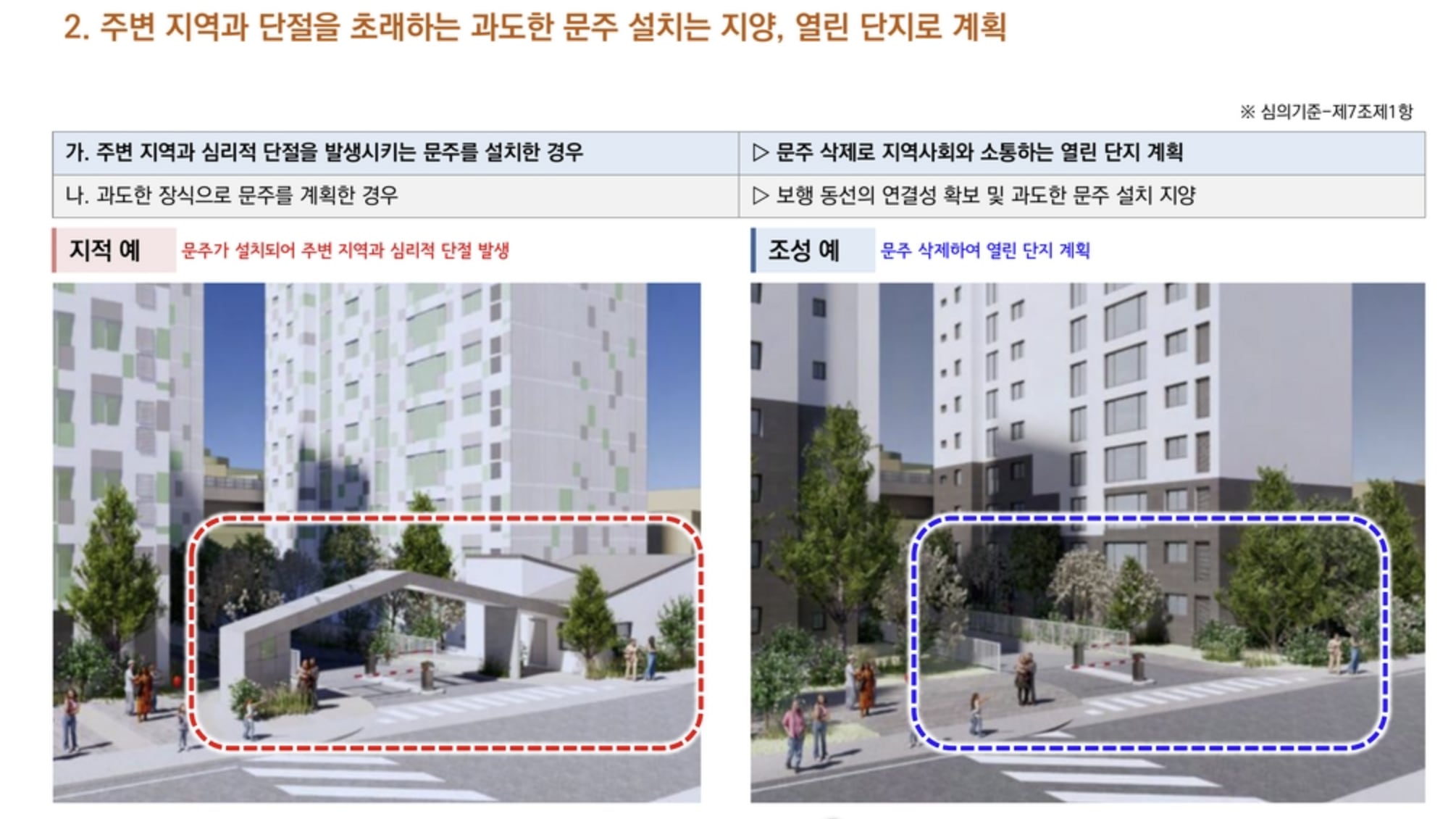
Recently, Seocho-gu asked large-scale development projects such as D’Le Towers Bangbae and RAEMIANTrini One to rethink their entrance pillar designs. This follows Seoul's architectural committee regulations which mention, "Avoid an excessive number of entrance pillars that create separation from nearby areas, and ensure developments are designed as accessible spaces." The entrance pillar design for RAEMIANTrini One includes dazzling light patterns similar to falling stars and a decorative, flowing structure like a curtain.
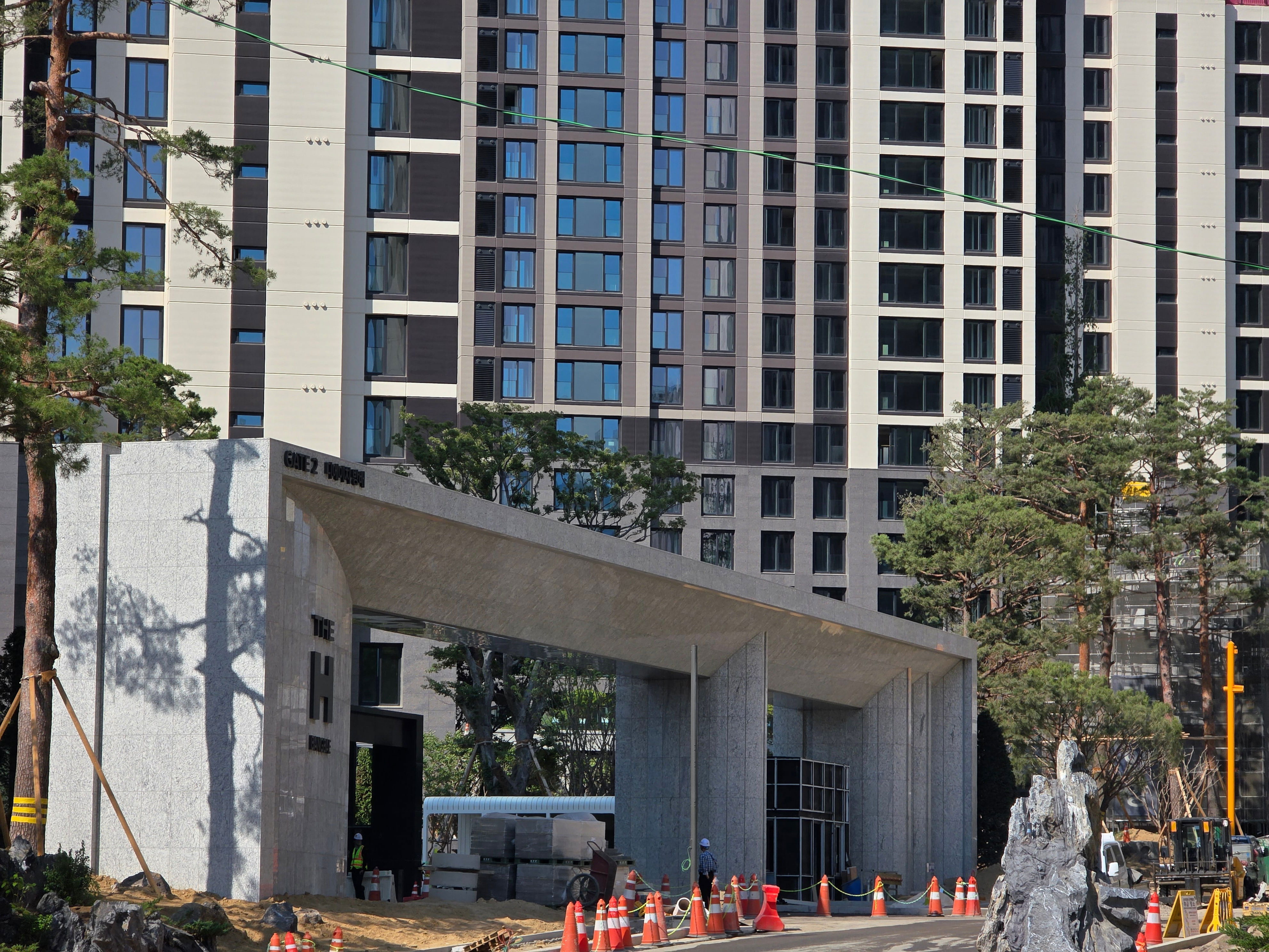
With increasing debate about whether Seocho-gu's proposal amounted to an actual call for reduction, Seoul City issued a statement on the 11th of last month, stating, "Seoul City does not impose limitations on original and unique entrance pillars in privately-led development initiatives." They further noted, "The entrance pillars at the residential complex in question were built following designs previously authorized by Seocho-gu, and we will implement actions to address the misunderstanding through discussions with Seocho-gu."
◇ The Debate Over the Second Sky Bridge ... Allegations of Restricted Vistas
Sources within the industry believe this might evolve into the "second Sky Bridge dispute." Similar to how Sky Bridges, which were previously marketed aggressively by building firms, encountered opposition due to harm to cityscapes and causing unease among residents, resulting in their abandonment, gate pillars could encounter comparable scrutiny.
Larger entrance pillars have led to disputes inside residential areas regarding blocked sightlines. A residence in Eunpyeong-gu, Seoul, which started inviting residents in 2017 and finished construction in 2020, encountered legal action. Residents from the second and third floors sought compensation, alleging that the renovation committee constructed unforeseen gateway structures and moved the security desk, violating their viewing rights. These gate posts measure about 22.8 meters in length and 7 meters in height, with no reference made to them in purchase agreements; occupants contended this breached their entitlement to an unobstructed view as well as their real estate privileges.
In this instance, the initial two trials recognized some degree of visual blockage and mandated compensation ranging from 5 million to 10 million won. Nevertheless, last year the Supreme Court dismissed this ruling, noting, "The gate pillars and security booth can be seen in only up to 20% of the plaintiffs' line of sight, and the sales agreement included additional clauses indicating 'landscape designs might be altered.'"