
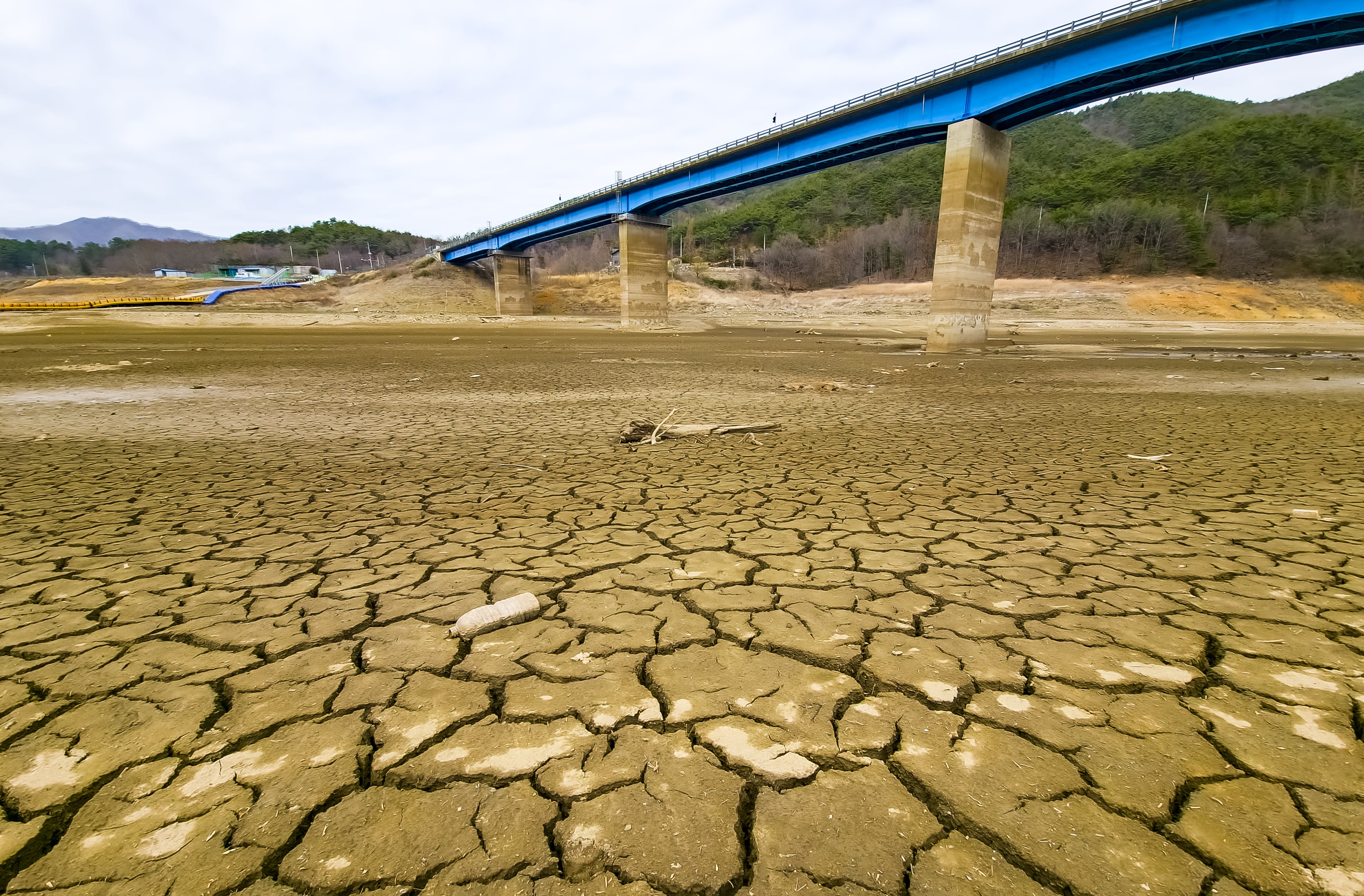
A significant drought affected Taiwan in 2021. In 2020, no typhoons hit Taiwan's main island, marking the first such occurrence in 56 years. With typhoons that typically provided much-needed rainfall disappearing, reservoirs quickly drained during the winter dry period. The second Baoshan Reservoir, supplying water to TSMC's key manufacturing facilities, saw its capacity drop under 5%. A countrywide policy of providing water every five days followed by a two-day cut-off was introduced. By the end of May, intense seasonal rains arrived, helping alleviate the situation. At the moment, this scenario was criticized as the "semiconductor industry dependent on weather conditions." It indicated that despite technological progress, actual operations reverted to an earlier stage where reliance on natural precipitation for water, similar to traditional farming methods, became necessary.
The Department of Climate, Energy, and Environment introduced a "water distribution strategy" for the Honam Semiconductor Complex. It was determined that supplying "1.06 million metric tons daily" can be achieved. According to the department's calculations, the currently anticipated demand stands at approximately 650,000 metric tons each day. Nevertheless, upon examining the government's proposal more closely, several unaddressed challenges become apparent.
The government mentioned that by integrating the "excess" and "unutilized surplus allocation" from multi-purpose dams located within the Yeongsan and Seomjin River watersheds, they could secure 200,000 tons daily. These river catchment areas cover just 13–18% of the Han River’s area. Due to their smaller size, they are naturally more susceptible to dry spells. During the “once-every-50-year” drought in 2022, Gwangju and South Jeolla Province endured a cumulative 281.3 days of meteorological drought. That accounted for 77% of the entire year being under drought conditions. When this drought continued through the next spring, the water levels at Dongbok Dam and Juam Dam dropped down to around 10%. Should another drought occur, this capacity of 200,000 tons might not actually be available in practice. Additionally, plans to divert 210,000 tons per day from Naju Lake, which serves as an irrigation reservoir, may encounter significant resistance from local farmers if such a drought coincides with crucial farming seasons—like the time of rice planting—which require high amounts of water.
The ministry also suggested increasing the size of Dongbok Dam (located in Hwasun, South Jeolla Province) to provide an extra 250,000 tons of water daily. Previously, this region had been selected by the previous administration for a “climate adaptation dam” initiative, intending to construct the “Dongbokcheon Dam” (with a volume of 310 million tons) between the Dongbok and Juam dams to meet needs for homes, industries, and farming. However, this proposal was abandoned when Minister Kim Sung-whan assumed his position. He mentioned factors such as limited reservoir space, ecological harm, and resistance from locals at that time. Currently, with growing water scarcity, he is advocating for a more extensive expansion of the dam. It’s unclear whether the people living in Hwasun, who have already experienced substantial flooding-related damages, will support this move.
Following Taiwan's severe drought, the response came not from the government but from TSMC. By investing billions of won, TSMC raised its process water reuse rate to almost 90% and constructed the world's initial industrial wastewater recycling treatment facility, attaining independence in water resources. Some worry that during a water scarcity emergency, the government could transfer full blame to companies. To avoid the Honam Semiconductor Cluster being labeled as "relying solely on heaven for semiconductors," advanced water management systems able to withstand dry periods must be set up initially. This is necessary so that there will never be a need to conduct rain rituals.