
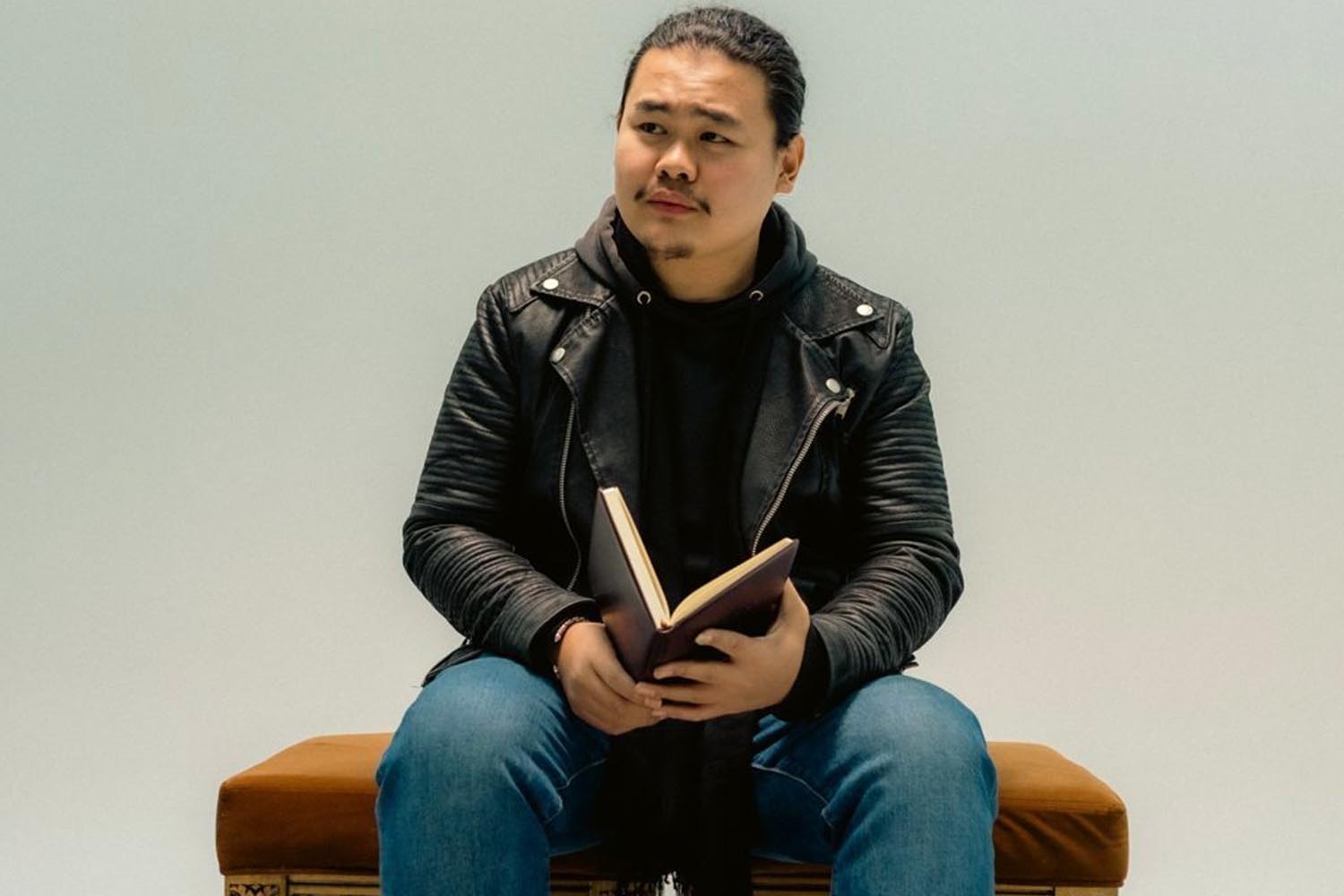
Nepal, July 2 -- Milson D Chamling is recognized for his work as both a poet and dramatist. His first contribution as a songwriter was in Abinash Bikram Shah's film titled 'Elephants in the Fog'. He has written several theatrical works, including 'Umlio Kharani ra Lemlemma' (2025) and 'The Taste of Selroti' (2026).
The former is now being presented at Kausi Theatre, Teku, along with Katha Ghera, marking his initial attempt at direction.
The Washington Post's Rivash Rijal met with Chamling to discuss his interests and inspirations, including poetry and dramas, as well as various other topics.
What sparked your interest in writing?
I began writing poetry. I occasionally continue to do so now. During my time at school, my proficiency in Nepali wasn't strong. It isn't my native tongue. My mom belongs to the Tamang community, while my dad is from the Rai group, and I spent my childhood in Tarai among Tharu friends. As a result, my speech, particularly my accent, reflected a blend of all these influences. I struggled just to get through my Nepali tests. However, Mr. Kumar Dhungana, my Nepali instructor, encouraged me to start composing poems, which marked the beginning of this journey.
Regarding playwrighting, my friend Yogendra invited me to see a performance. Shilpi Katha Samuha was presenting "Sano Macha, Thulo Macha" in Itahari, which was where I happened to be. I had a bus pass heading to Kathmandu, yet Yogendra questioned whether I'd ever witnessed a play. Since I hadn’t, I purchased an alternative bus ticket and attended the show.
I believe that when individuals initially see theatrical performances, they might question, "Why am I not performing?" However, I found myself asking, "Why am I not composing?" This was the beginning of my journey.
Your narratives have included elements from Eastern traditions, languages, and societies. What makes this significant?
Our community has a shruti tradition known as Mundhum. Some say that Mundhum serves as the Kirati "Veda," but this is incorrect. It is actually an oral heritage. These are holy expressions for us, typically recited during ceremonies. All knowledge about our customs originates from external sources—specifically, texts written by the Newars during the Malla and Licchavi periods.
There is a festival called Mangshire, during which the entire village takes part. All individuals gather and eat collectively. Following this, the oldest person from the hosting family takes a seat near the fire pit and tells tales. People form a circle around them, attentively listening. Typically, one can hear the kids laughing, yet when observing the older people, they may be wiping away tears as they absorb the narration.
I fear the disappearance of languages. Many tongues are vanishing across the globe. Bhupal Rai, former chancellor of Pragya Prathistan, once said: "If we lose our tales, we risk losing who we are." Therefore, I'm making efforts to safeguard our narratives so that we do not fade away.
How do you approach the act of writing?
I don't immediately put down everything that pops into my head. I might jot down the thought, but I don't work on it right away. I prefer to let my ideas sit and mature. Similarly, many of our foods undergo fermentation, which is also a flavor that needs time to grow on you.
Fermentation represents that hardship for me. Our communities allowed their food to ferment as a means of survival rather than for flavor. Similarly, many of our narratives revolve around struggle. When I write, I often reflect on these tales of adversity.
For instance, with "The Taste of Selroti," I've been thinking about it for approximately a year. However, I left it aside; I didn't rush into writing. Once I began, it only took me roughly three days to complete.
What different languages are you capable of speaking?
I am fluent in four languages—Nepali, English, Hindi, and Bantawa. I have some understanding of Tamang and Tharu, but I'm not able to converse in those. Some people believe that the language you use influences your character, and I agree with this idea, as it varies based on which language I speak.
French psychoanalyst Jacques Lacan argues that the unconscious of the mind is influenced by language. I possess a strong passion for language that motivates my work.
What comes next for "The Milson Project"?
I aspire to direct a movie. Several individuals in my life have encouraged me toward this path. I possess certain narratives that must be brought to the stage. It is the most appropriate platform for these tales. Certain stories indicate which format they thrive in the most.
However, once I complete that, I intend to focus on directing films.
Five film picks by Milson D Chamling
The Taste of Cherry
Director: Abbas Kiarostami
Year: 1997
Chunking Express
Director: Wong Kar-wai
Year: 1994
Stalker
Director: Andrei Tarkovsky
Year: 1979
Pather Pachali
Director: Satyajit Ray
Year: 1955
Numafung
Director: Nabin Subba
Year: 2001
Five book suggestions from Milson D Chamling
The Offspring of a Lower Rank The Progeny of a Lessers' Lineage Those Born from a Subordinate Bloodline Descendants of a Lesser Kinship Offsprings of a Humble Heritage Children of an Inferior Ancestry Lineage of the Unremarkable Progenies of a Modest Origin Heirs of a Lesser Legacy Kin of a Reduced Standing
Author: Mark Medoff
Publisher: Amber Lane Publishing
Year: 1982
Medoff showed me what a dramatist needs to understand. One day, I hope to bring this tale to the theater.
Every Brilliant Thing
Writer: Duncan Macmillan along with Jonny Donahoe
Publisher: Bloomsbury Publishing
Year: 2013
A child creates for his mother a list of elements that contribute to a meaningful existence. This prompted me to contemplate my own life.
Who Is Afraid of Virginia Woolf?
Author: Edward Albee
Publisher: Atheneum Books
Year: 1962
It had me awake throughout the entire night. Initially, every conversation seems straightforward, yet they are rich with underlying meanings.
Hamlet
Author: William Shakespeare
Publisher: Valentine Simmes
Year: 1603
The dynamic between Claudius and Hamlet is intriguing. Similarly, it's notable that all female characters in the play were traditionally portrayed by male actors.
Bise Nagarchiko Bayan
Author: Shrawan Mukarung
Publisher: Sangri-La Books
Year: 2005
The literary work of Mukarung stands as the pinnacle of Nepali verse. It should be read by all.