
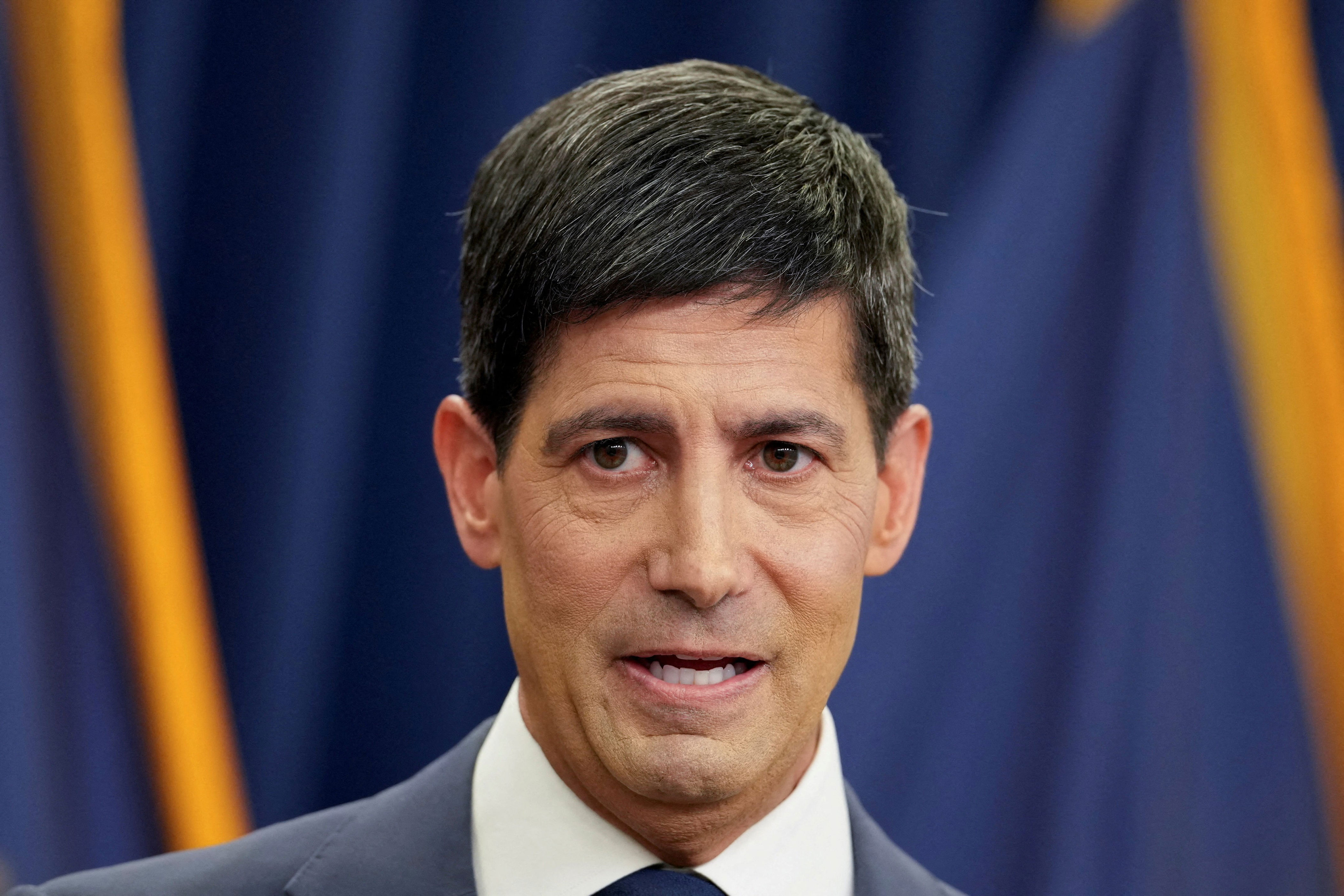
Kevin Warsh, who serves as the head of the U.S. Federal Reserve (Fed), remarked, "The swift advancement of artificial intelligence signifies a significant change in how policies are managed and impacts the larger economic landscape," noting, "This transformation is currently only in its early stages, so to speak." Governors of central banks across leading world economies expressed similar opinions, believing that AI has the potential to affect various areas such as financial markets, employment sectors, banking loans, safety measures, and energy consumption.
As per a Reuters article, artificial intelligence became a key focus running through almost every agenda item—including monetary policy, financial stability, and regulation—at the ECB’s yearly banking conference, which ended on July 1 in Sintra, Portugal.
Warsh, who attended the conference for the first time this year, stated, "This is an era that will have the greatest impact on global economies during our lifetime," and questioned, "Who would have imagined the generation of 1.5 million job positions for Uber drivers at the beginning of the Internet? We're still in the early stages of this transformation."
All participants agreed that AI might cause unexpected disruptions within the global financial system.
The Bank for International Settlements (BIS) has warned about potential negative impacts in the near term, pointing out that the magnitude and pace of today's artificial intelligence investment surge mirror past events like the British railway frenzy of the 1840s, the asset speculation of the 1920s, and the internet stock craze of the 1990s.
According to Torsten Slok, the chief economist of U.S.-based investment firm Apollo Global Management, investments in artificial intelligence-related machinery have contributed roughly one percentage point to the growth of the U.S. gross domestic product (GDP), whereas inflated stock prices related to AI companies are currently experiencing adjustments.
He cautioned, "The security of financial systems is at risk regardless of whether AI exceeds predictions or underperforms," and noted, "There is no secure situation."
Other worries have been expressed regarding artificial intelligence algorithms influencing market values. Itay Goldstein, a faculty member from the University of Pennsylvania, remarked, "Artificial intelligence algorithms can clearly engage in collusion to alter price trends, leading to speculative bubbles and causing collapses," adding, "This presents greater risks for economic security."
Concerns arose that should AI become heavily involved in determining bank loan approvals, regulatory bodies might find it difficult to evaluate potential dangers.
Tobias Adrian, a representative from the International Monetary Fund (IMF), asked, "How do regulators assess loan choices made by these artificial intelligence systems?" He compared it to "a black box," noting, "it's challenging to understand the reasoning behind these decisions, which presents the main regulatory difficulty."
Attendees concurred that should AI develop as anticipated, it might substitute human work extensively, resulting in job losses and lower spending. On the flip side, if it fails to meet expectations, significant investments may yield poor returns, causing instability in financial systems.