
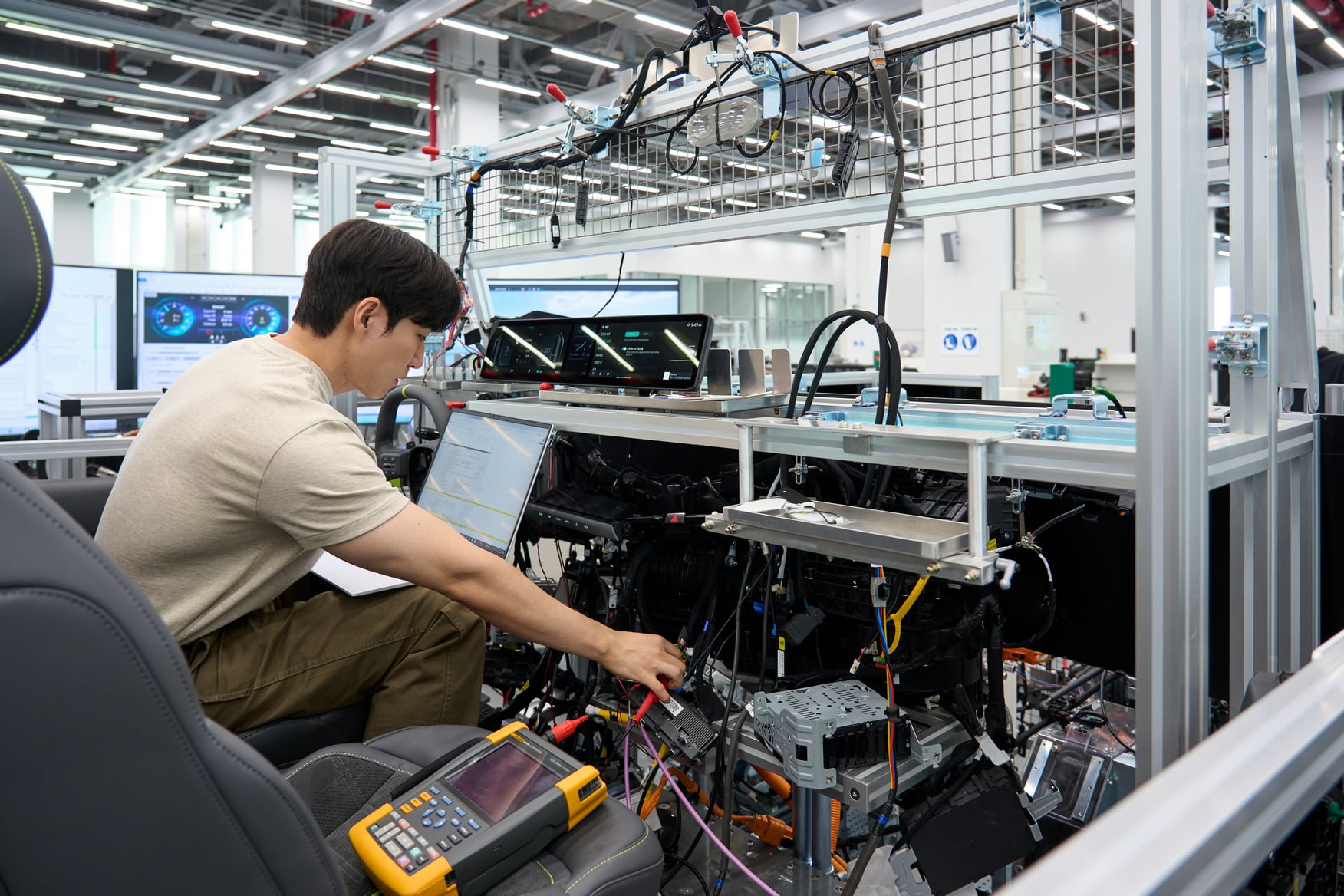
On day one, we visited the 'NOVA Lab' at the Hyundai Motor and Kia Namyang R&D Center located in Hwaseong City, Gyeonggi Province. At the heart of the laboratory was a 'Wire Car,' which looked like it had been taken apart, revealing just its framework. Minimal control systems were still present, including hazard lights, gear shifters, a steering wheel, brakes, and screens, while numerous wire looms, electronic control modules, and different electrical parts were closely linked together. This marks the initial stage for testing the overall performance and connectivity of the vehicle system through physical connections prior to starting large-scale manufacturing. After assembling a full car, it would be difficult to take it apart and check each circuit and component individually; thus, the objective is to detect possible problems ahead of time.
The process of vehicle validation is set to enter the 'SDV (Software-Driven Vehicle)' age. Previously, attention was mainly directed towards engine and transmission development, but the upcoming battle in automobile innovation will depend on how effectively and quickly software manages vehicles and how comprehensively these systems can be tested. Hyundai Motor and Kia, following this shift, finished building a state-of-the-art controller testing center last month and officially opened the site for public viewing on that same day.
On that particular day, a scientist occupied the driver's seat and modified the climate control settings, air flow, turn signal preferences, and seating arrangement through a big display. Real-time graphical representations showed how every feature was functioning. With tools designed for assessing engine and motor performance, the system enables analysis of functions such as intelligent cruise control and automatic lane correction without requiring physical operation. Kim Sangyeon, who holds a leadership role at Hyundai Motor, mentioned, "Numerous controls that were spread out across different systems during the time of traditional engines have now been combined into only several unified controllers within the SDV period." He further noted, "During this stage of testing the Wire Car, we typically discover around 150 to 200 problems."
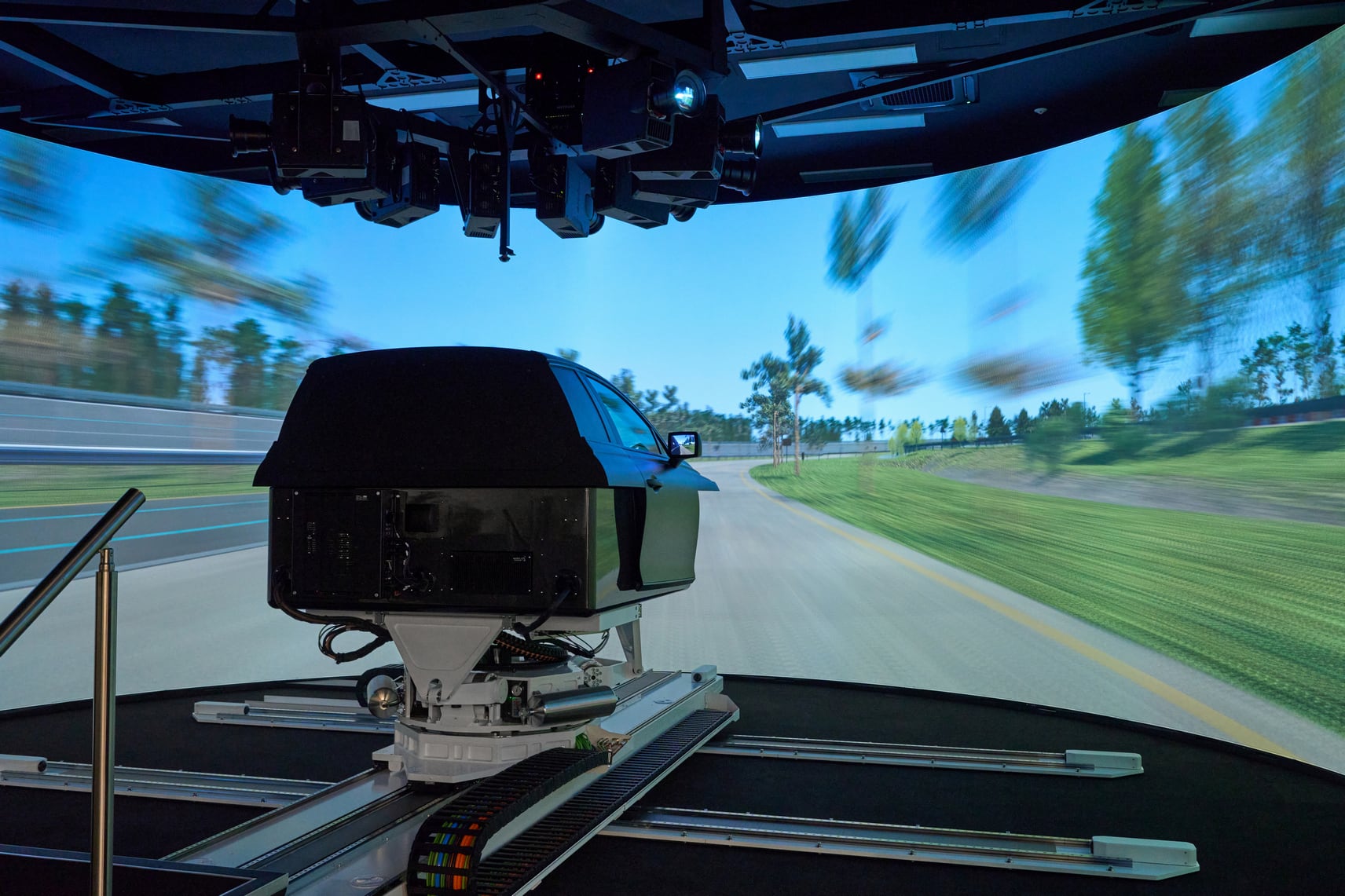
A simulation system allowing a car to drive on a digital roadway was also introduced. A researcher occupied the driver's seat facing a 270-degree curved display, with the entire cabin of the Genesis G80 visible. When the accelerator and brake were pressed, along with steering movements, the vehicle model swayed side-to-side, conveying even minor road vibrations. The surfaces at the Namyang Research Institute’s test site were meticulously captured in one-millimeter intervals, accurately reproducing inclines, potholes, and pavement textures. Since 2020, every new vehicle launched by Hyundai Motor and Kia has gone through validation here. High-end models such as Hyundai’s N line, Genesis Magna, and racing cars have also been evaluated within this center. Previously, numerous physical prototypes needed to be constructed and assessed via real-world tests to detect problems; however, the firm now intends to enhance performance virtually, streamlining the evaluation procedure.
In a different section of the research facility, elements were being produced through 3D printing methods. The 'Additive Manufacturing Solution Center (AMSC)' produces parts without requiring molds by hardening liquid resin with ultraviolet light or melting metal wire one layer at a time. At the site, there was an exhibition showcasing a repaired side sill (bottom doorframe) from the Hyundai Pony. This aged component, for which no original designs existed anymore, was brought back to life utilizing '3D printing' technology. An individual from Hyundai Motor and Kia stated, "This method has potential applications beyond restoring classic vehicles; it can also be used for making lighter-weight pieces for racing, spare parts for older model lines, and urgent replacements when molds get broken."