
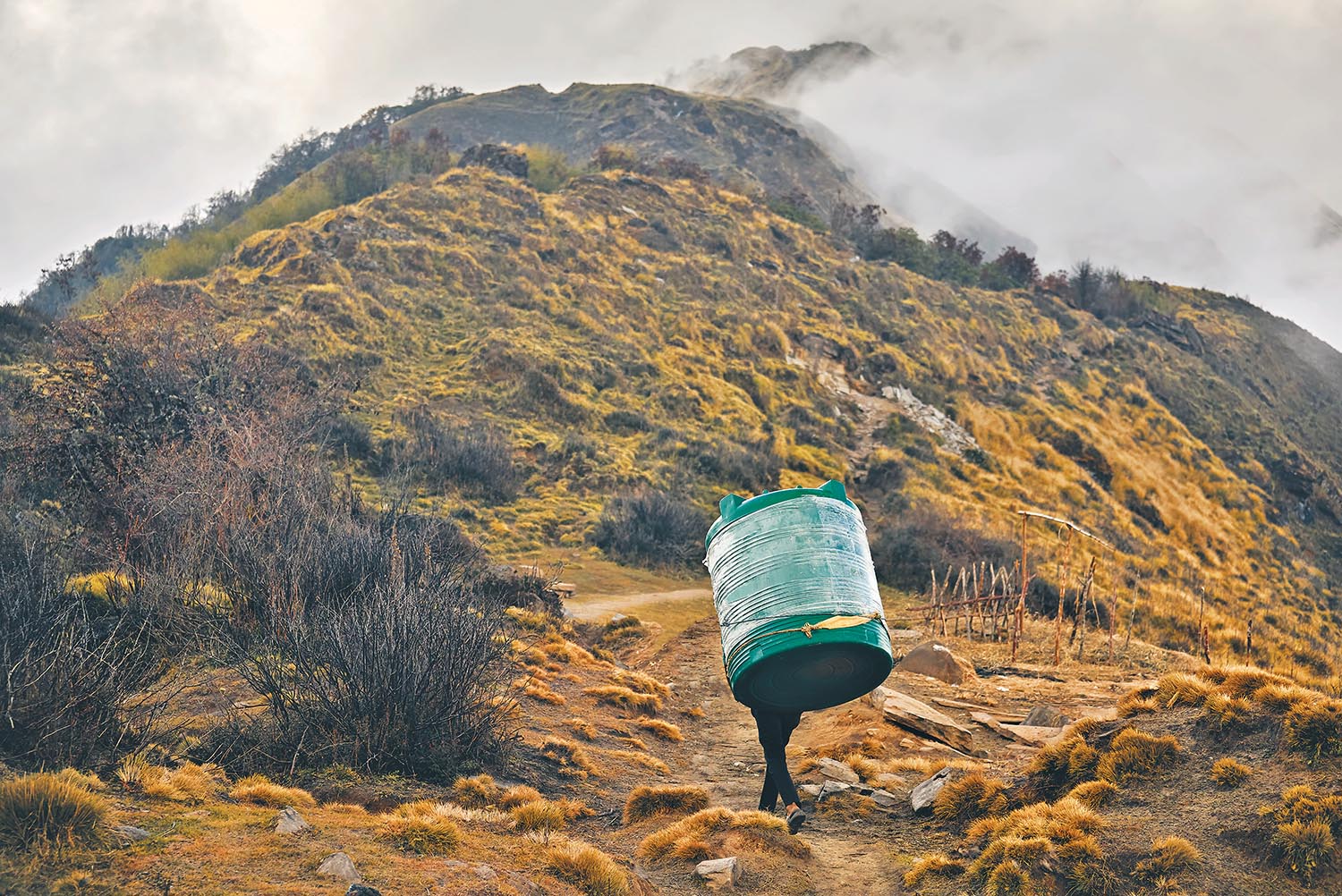
Kathmandu, July 2 – As more households in Nepal adopt water storage tanks and worries about their quality increase, the Nepal Bureau of Standards and Metrology (NBSM) has updated and introduced new guidelines for rotationally molded polyethylene water storage containers.
The current standard, initially launched in 1995, is optional. Only those producers who acquire the Nepal Standards (NS) certificate must adhere to its requirements.
"Microplastics and nanoparticles may seep into stored water as plastic containers break down from extended exposure to high temperatures and direct sunlight, especially if these containers aren’t made following Nepal’s standards," stated Anil Shakya, head of the Nepal Bureau of Standards and Metrology.
He stated that the updated guideline was developed to guarantee that people can obtain clean potable water and are not misled by inferior goods.
One important aspect of the updated guideline is the addition of a migration test, designed to check if plastic particles might release into the stored water when in use.
A procedure known as a microplastic migration test measures the quantity of microscopic and nanoplastic particles that escape from a water reservoir when the substance is exposed to deionized water or a food mimic under controlled temperature and duration parameters, followed by an examination of the fluid for the presence of plastic fragments.
The agency performs testing throughout the production phase for businesses aiming for Nepal Standard accreditation. Producers must also execute the mandated tests during manufacturing, while the agency carries out market monitoring by taking samples from both factories and retail stores.
Nepal's compulsory certification scheme does not include polyethylene water storage tanks at this time, enabling producers to manufacture and market them without adhering to Nepalese standards.
To modernize the almost thirty-year-old standards, the agency established a committee made up of members from its technical departments, engineering institutes, and water tank producers.
According to Shakya, the updated standard outlines that the density of polyethylene utilized in water storage containers must be within the range of 932 to 943 kilograms per cubic meter.
As per the draft, outdoor-use water tanks should be made of carbon black blended polyethylene. The carbon black concentration needs to be within 2 to 3 percent, and its distribution has to comply with the testing methods outlined in the Nepal Standards.
The proposal also permits producers to utilize up to 10 percent of their internally reprocessed material obtained during the creation of tanks adhering to the same regulation. Nevertheless, it bans the application of recycled plastic debris or refined substances from different origins, along with additives, in the fabrication procedure.
The polyethylene resin utilized for producing water storage containers needs to be of rotationally molded type and protected with antioxidants. These antioxidants, whose quantity shouldn't go beyond 0.3% of the final resin weight, must be safe for human health and chosen from the list authorized according to Nepalese standards.
The suggested guideline also states that the tank shell, cover, and components which touch the water should not add any flavor, hue, or smell to the water, nor cause any harmful effects that might render it unfit for drinking.
The proposal enables producers to create either single-layer or dual-layer rotationally molded polyethylene storage containers. In the case of dual-layer tanks, the internal layer has to be white, whereas the external layer needs to be black and constitute not less than half of the overall wall thickness.
"The outer white layer helps customers determine if the stored water is clean or polluted," stated Shakya.
The updated version includes five globally acknowledged testing procedures which producers must adhere to in order to guarantee the standard and security of their products.
Producers have accepted the update, stating that the old standard did not align with developments in manufacturing techniques and quality needs.
"we have been strongly advocating for the government to revise the standard, and currently, the updated version is nearing completion," stated pulkit jain, director of hilltake group, which produces polyethylene water storage tanks.
Jain mentioned that his company has been manufacturing water tanks following the Nepal Standards and backs the suggested changes.
He further stated that adherence must no longer be optional due to its immediate effects on community well-being.
Most homes use water kept in plastic containers, therefore the government needs to enforce this as a requirement," he stated. "Numerous buyers are acquiring water storage units that lack the Nepal Standards label and are of inferior quality.
As of mid-April, the bureau reported that eight producers have received the NS certification for polyethylene water storage tanks.
These comprise Hilltake Industries based in Morang, Kishan Pipe Products located in Nawalparasi, Dakshinkali Plastic Industries situated in Jhapa, Nawa Nepal Plastic Industries from Rupandehi, Rijalco Polytank Industries in Sunsari, Om Panchapuri Industries from Banke, Nepal Sintex Industries in Chitwan, and Gyani Poly Tank Industries also from Rupandehi.