
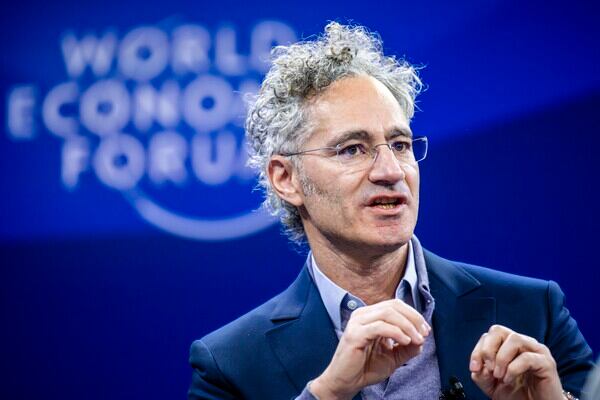
Alex Karp, chief executive of Palantir, has sharply denounced closed artificial intelligence firms like OpenAI and Anthropic. He remarked, "They're spending time on superfluous tokens without accomplishing anything."
Karp was featured on the U.S. financial television network CNBC on the 1st (local time), stating, "I'm not trying to undermine them, but there's clearly an issue."
He stated, "U.S. business leaders are expressing frustration over spending money on tokens that fail to add value," and further remarked, "At their core, these closed systems have been grossly misrepresented." Tokens represent the basic textual components handled by AI during text processing and generation, usually charged based on every one million tokens. Lately, with businesses urging staff to adopt AI tools, a trend known as "token maximization" has arisen; however, some argue that real gains in workplace efficiency or financial returns haven't met anticipated levels.
He additionally voiced worry regarding the U.S. Department of Defense's dependence on proprietary artificial intelligence systems, stating, "Are we entrusting our country's battlefronts to the prevailing views of Silicon Valley? That is insanity." Upon the moderator interrupting with, "It seems you're quite upset," he countered, "Not at all. This is the perspective of American corporations speaking through me."
Experts believe Karp's sharp critique arises from Palantir's engagement in developing open-source models. Palantir has lately collaborated with NVIDIA to create adaptable, open models functioning within a "Sovereign" framework. According to Palantir, this approach enables clients to retain authority over their data, proprietary information, and artificial intelligence infrastructure, along with direct ownership of customized models designed for their specific needs.