
With the line separating human-made and artificial intelligence-generated material growing more unclear, a regulation introduced by Valve Corporation, an American video game company known for the PC gaming service Steam, mandating transparency about AI usage has ignited intense discussion within the gaming sector. Opinions differ on whether this rule provokes resistance among players who dislike AI, impeding creators, or ensures customers' entitlement to information.
The debate began after comments made by Tim Sweeney, the CEO of Epic Games, during an interview with international gaming publication PC Gamer. Sweeney questioned Valve's required AI transparency rules, claiming they create unnecessary complexity for developers. "Developers who have to launch their games on Steam end up having to mark their titles with an 'AI red badge,'” he remarked, noting his disappointment as it leads to criticism from certain online groups. He suggested that artificial intelligence is simply a means of generating distinctive content, similar to what can be found in 'Asset Stores' or through 'photographic scanning.' According to him, the real worth of a game comes from its story and mechanics rather than its visual elements. "Creators are now compelled to either stop using efficiency tools or deal with negative reactions," he concluded.
I Sanchez, an artist at Valve working on remapping for *Counter-Strike 2*, explicitly denied Sweeney's statements. "It's similar to disputing nutritional information on packaging," Sanchez remarked. "Customers should be able to make purchasing decisions based on what goes into a product." He further stated, "People worried about revealing AI use are usually those aware their games aren’t well-crafted. Informed players would prefer authentic work rather than copies." Nevertheless, opposing views were presented: compared to food or electronic devices, AI-created games do not present immediate risks to users.
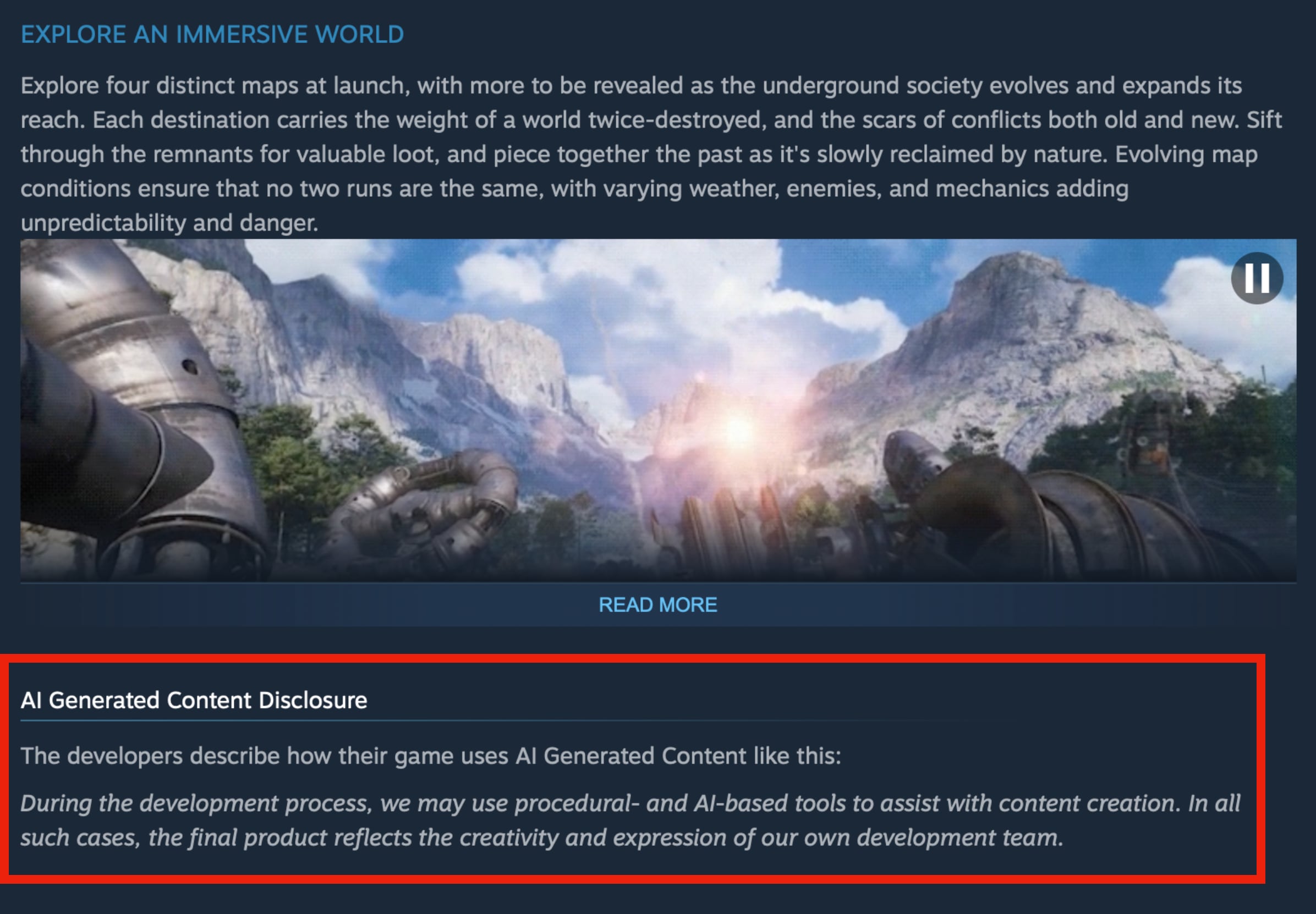
Starting from 2024, Steam requires game developers who utilize generative AI during the creation process to reveal this detail. However, AI-based "code assistants" designed for programming support are not subject to this rule. Games, nevertheless, need to inform players if they have employed AI to generate visual elements or promotional content. As an illustration, *Arc Raiders*, a worldwide success developed by Nexon, clearly mentions on Steam that AI technology was utilized for animating robotic movements and implementing text-to-speech features.
Long-standing gamer dissatisfaction with artificial intelligence in game creation stems from beliefs that it diminishes overall quality. Microsoft's Activision released *Call of Duty: Black Ops 7* (2025), which drew backlash for featuring a zombie Santa depicted with six fingers—a common sign of AI-related visual mistakes. Additional concerns have emerged regarding secondary effects, like increased expenses for memory semiconductors caused by the expansion of AI data centers, leading to higher prices for gaming computers.
With increasing opposition, certain studios have pledged to steer clear of artificial intelligence-created material. Capcom, known for developing the *Resident Evil* franchise, declared it will not incorporate AI-produced elements into its video games. Asha Sharma, the newly appointed chief executive officer of Xbox, remarked, "We won't populate our platform with lifeless AI content."