
Recent military interactions between the U.S. and Iran have put pressure on the delicate truce, jeopardizing initiatives aimed at bringing stability to the Middle East and ensuring safe passage for ships through the vital Strait of Hormuz.
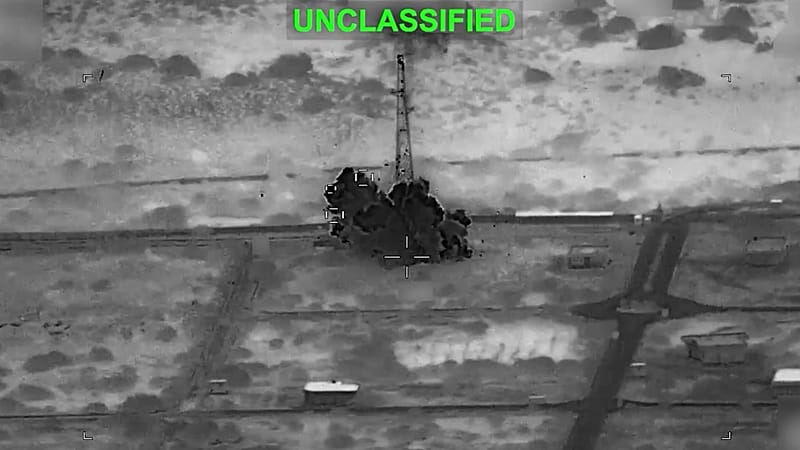
The most recent surge started on Friday as the U.S. military reported intercepting four Iranian drones en route to the Strait of Hormuz, followed by attacks on Iranian coastal radar facilities in Ghorak and on Qeshm Island.
As per the United States Central Command (CENTCOM), the drones presented an urgent danger to ships navigating the region and "thereafter targeted Iranian shore-based monitoring radar installations... to safeguard against additional assaults."
These events present a significant threat to a truce that has mostly remained intact since April 8, after fighting began due to U.S. and Israeli attacks that resulted in the deaths of many high-ranking Iranian officials.
Further tensions arose when air raid alarms were activated in Kuwait and Bahrain, two key U.S. allies in the Gulf region. Correspondents from AFP mentioned they heard detonations in both nations.
The Kuwaiti armed forces stated that their air defense systems were countering "aggressive" missile and drone strikes without identifying the perpetrators.
The Islamic Revolutionary Guard Corps subsequently claimed they fired missiles at what they referred to as "enemy installations in the region," in reaction to their designation of a U.S. "incursion" into Iran's Sirik and Qeshm islands.
CENTCOM reported that Iran launched seven ballistic missiles aimed at Kuwait and Bahrain. Six of them were stopped, while the seventh did not hit its intended destination.
"No incidents have been reported that have harmed U.S. staff, and statements from Iran regarding damage to the U.S. Fifth Fleet headquarters in Bahrain are untrue," stated CENTCOM in a press release.
New outbreaks of violence follow several weeks of challenging diplomatic attempts to end the fighting and restore access to the Strait of Hormuz, one of the globe's key oil transportation corridors.
The canal plays a major role in transporting a large portion of worldwide crude oil and liquid natural gas shipments, so any interruption could affect global energy trade.