
Economic security specialists from South Korea and Japan have convened in Seoul to explore collaboration between the nations as global supply chains undergo changes due to escalating U.S.-China geopolitical rivalry.
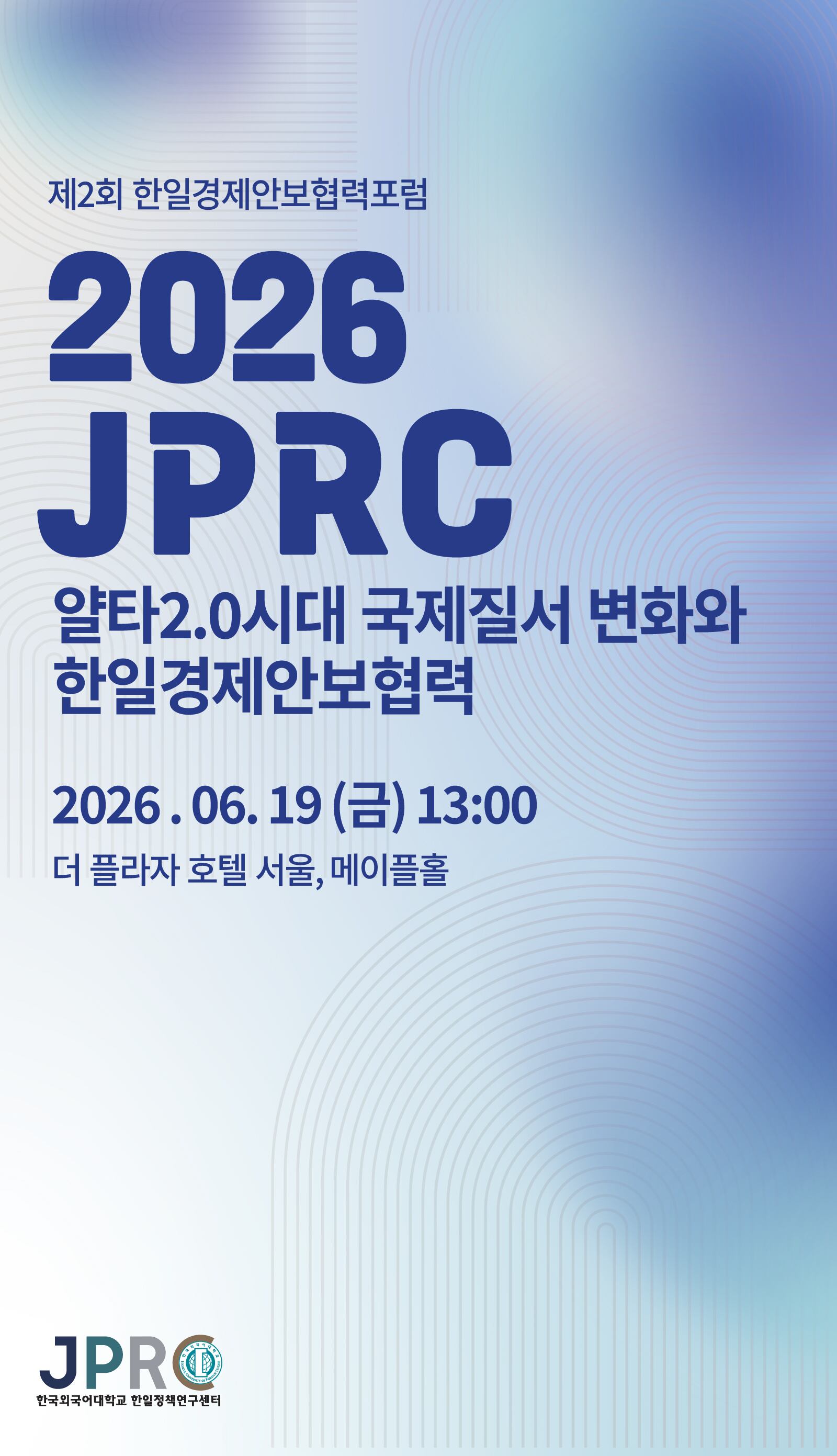
Hankuk University of Foreign Studies' Korea-Japan Policy Research Center stated on the 12th that it plans to host the "Second Korea-Japan Economic Security Collaboration Forum," with the topic "Shifts in the Global Order during the Yalta 2.0 Period and Korea-Japan Economic Security Partnership," at the Plaza Hotel located in Jongno District, Seoul, on the 19th.
During the opening session, Professor Park Sang-jun from Waseda University will lead the conversation. The participants and panel members consist of Professor Suzuki Kazuto and Professor Sahashi Ryo from the University of Tokyo, Professor Kuno Arata from Asia University, Professor Park Sung-bin from Ajou University, and Yeon Won-ho from Hyundai Motor Group GPO. They will discuss the subject "International Political Developments in the Yalta 2.0 Period and the Economic Security Situation on the Korean Peninsula."
The second session, led by Professor Lee Chang-min from Hankuk University of Foreign Studies (Head of the Korea-Japan Policy Research Center), will address issues and future paths for Korean-Japanese economic security collaboration within changing global dynamics. Participants consist of Professor Chishima Tomonobu from Hannan University, Ando Masami (Director of JETRO Seoul), and Senior Researcher Choi Jung-hwan from the Korea Institute for Industrial Economics and Trade.
Professor Lee Chang-min remarked, "The current global scenario is experiencing swift transformations driven by escalating U.S.-China strategic rivalry, realignment of worldwide supply networks, and contest in cutting-edge technological fields." He further noted, "An increasing necessity exists to build reliable supply lines and foster partnerships within key areas like semiconductors, batteries, energy, and digital enterprises." Professor Lee highlighted, "Such developments bring about shared difficulties alongside fresh prospects for collaboration between South Korea and Japan. The conference seeks to analyze alterations in the world order and economic safety contexts, along with exploring joint initiatives the two nations might undertake, covering aspects such as securing supply chains and teamwork in high-tech industries, digital technology, and energy domains."