
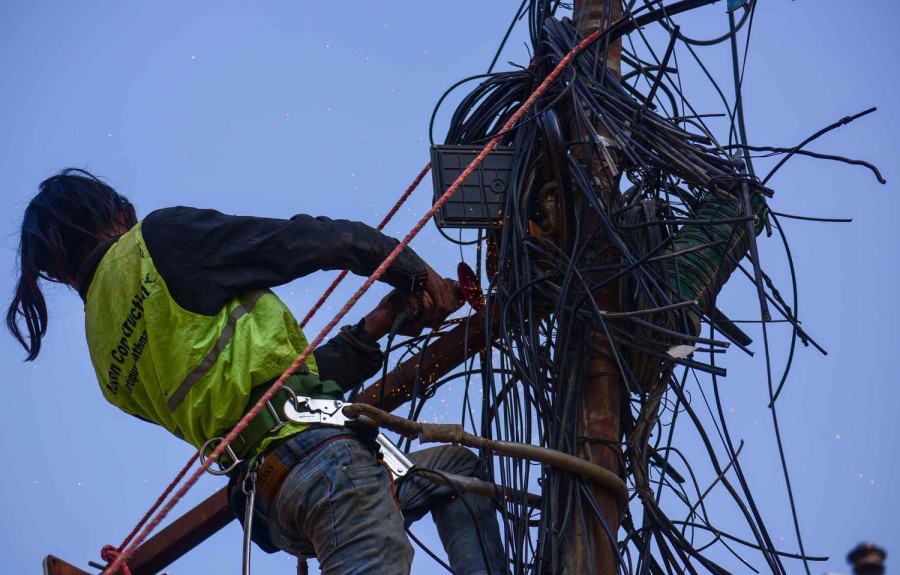
July 2 - Nepal has achieved significant improvements in increasing electricity availability. According to official data, approximately 97% of the nation currently enjoys power supply, an achievement worth acknowledging. However, this accomplishment carries a troubling consequence. Each year, numerous individuals throughout the country become victims of electric shocks, often leading to severe outcomes. An analysis of Nepal Police reports from July 2014 through July 2019 revealed 2,267 cases of electrical injuries over five years, with nearly 59.1% resulting in fatalities.
A study prepared by the National Human Rights Commission presents a similarly concerning scenario. It documents 449 fatalities due to electrocution within a span of five years. The count of individuals who survive but endure permanent disabilities is also considerable. This trend remains consistent throughout different regions, and in many instances, the root issue lies not with the victims' actions but rather with inadequate handling of power systems.
The committee has recorded many instances where individuals suffered fatal injuries or lost body parts due to electrical surges while fixing water pumps. Agricultural workers have received electric shocks upon touching broken power cables that had not been fixed, leaving nearby residents unaware. Power lines operating at high voltage, which were harmed by weather events or other factors, kept transmitting electricity until the Nepal Electricity Authority addressed the issues, leading to preventable fatalities and lasting impairments.
A similar incident took place in March 2024 within the Rapti Rural Municipality of Dang, resulting in the death of three individuals from the same household due to direct exposure to an un-repaired live power line. Such events prompt concerns regarding how authorities manage deteriorated electrical systems. These incidents often point toward unplanned road development and digging activities as contributing factors, which reportedly cause electric poles to become unstable or fall over. Although there may be some truth to this reasoning, it does not justify the authority’s serious failure to address faulty infrastructure quickly and safeguard citizens from recognized dangers.
Individuals affected and their relatives frequently encounter prolonged efforts to obtain damages, which typically remain minimal. Sabita Thapa from Gothatar lost both her arms following an electrocution incident in 2014 and had to wait several months before receiving a payout of Rs 375,000, despite her medical expenses amounting to approximately Rs 5 million. Her situation is not isolated. In addition to the loss of life and income, the harm inflicted on electrical devices due to power surges has remained relatively unnoticed.
Several successive administrations have appropriately focused on generating electricity and increasing access to energy. They view this sector as one of Nepal's most significant economic prospects, supported by rising exports to India and Bangladesh, along with aspirations to enter new markets. However, the emphasis on production, transportation, and export activities has not been paralleled by a similar dedication to ensuring public safety.
Electrical energy has the potential to enhance people's quality of life rather than harm them. Although extending electrical connectivity to nearly all homes is a praiseworthy accomplishment, this progress should never result in loss of life or damage to living conditions. As Nepal increases its electricity production and expands the power network, safety measures in infrastructure, prompt maintenance, increased responsibility, and equitable support for those affected must receive similar attention. No excuse exists for fatalities and permanent injuries resulting from risks that could have been anticipated and avoided.