
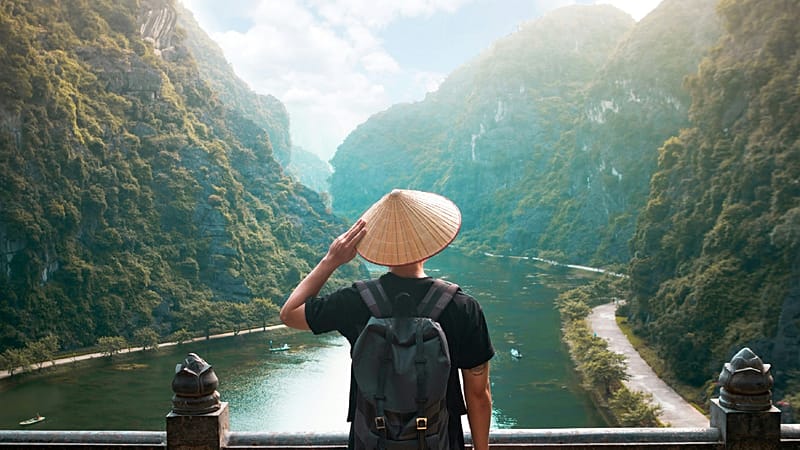
A fresh English term is circulating within Spain's travel sector and advertising firms. What was once simply a relaxed Sunday visit to the Monastery of Santo Domingo de Silos, the origin of Castilian Spanish, is now promoted as a "sanctuary amidst quietness." Taking a stroll through Sierra Cebollera, located in La Rioja's Cameros area? It's described as an environment where you can "get lost."
In the newest development promoting 'unique' locations within a nation that received 96.8 million visitors, almost twice its population In 2025, even Spain's official tourism website has embraced the 'slow tourism' trend, which refers to traveling at a relaxed pace.
Experts in the field describe this emerging trend as "a tourism approach that promotes enjoying the moment, focusing on spending, via gradual traveling methods."
Experts focusing on this specific area claim that a slower type of travel offers a chance to boost lesser-known or countryside locations, helping local populations and collaborating with them to achieve sustainable development.
Viewed from a public policy standpoint, this approach is logical: large groups of tourists often concentrate in limited areas, and authorities—such as those in France and Japan—are now more actively encouraging visitors to explore different parts of their country to reduce congestion and distribute the benefits of one of the globe's most profitable industries.
In Spain itself, Nearly half of all travelers are found within only three areas - Catalonia, the Canary Islands, and the Balearic Islands - even though it is the third-largest nation in Europe.
Social media has enabled this trend, though occasionally it alters the idea in favor of visual appeal.
Influencers like Sonia Mota (@simplyslowtraveler) have gained 1.1 million followers on Instagram through a feed featuring calm colors, typical Mediterranean imagery, and significant spending. A basic Google search reveals emerging travel companies attempting to capitalize on this trend by offering "customized" group trips.
Nevertheless, many writers argue that this trend, although more prominent now than ever, is not novel and has specific social implications about how individuals perceive their roles as travelers and their relationship with the local community.
Advantages and disadvantages of 'slow' tourism
In his book "The Tourist: A New Theory of the Leisure Class," published in 1976, Dean MacCannell coined the term "staged authenticity," describing how tourist areas create an imitation of real cultural experiences. Essentially, travelers might realize that what they're witnessing is more like a show than actual daily life, but they still go along with it.
In Ready to change how we move around? A group of scholars from Australia and China point out, on one side, the advantages of slow travel: the intention to minimize ecological footprint; to seek out genuine and significant experiences (even though some inconsistencies have been noted by MacCannell); or to develop a connection with the destination.
Experts also highlight another commonly used argument by supporters of slower travel: seeking well-being or self-reflection in a fast-paced society. Nevertheless, they present several concerns that should not be overlooked. Is it truly possible to significantly enhance the sustainability of a journey when the traveler relies on air transport to reach their destination?
Even if you agree to forgo air travel, does this kind of journey ultimately limit itself to more affluent regions where alternative transportation options are accessible?
It is different, for instance, to attempt to travel across Europe by train or campervan One of the smallest yet most affluent continents globally, much like how it is to traverse South America, where inadequate infrastructure and extensive distances necessitate air travel for efficient movement within a limited timeframe.
As a reply, others suggest that staying longer in one location might be better than rushing through multiple popular tourist spots. This approach is advocated by organizations like Tintablanca, a media company specializing in travel content, which promotes selecting one place and "making the most out of it."
"It concerns leasing a modest apartment in Rome's Trastevere district or in Paris' Marais neighborhood and experiencing daily life as locals do," they wrote.
However, can a traveler with limited funds and only a few days off truly manage, as this magazine idealizes, "to visit the same bakery each morning, learn to say hello to the server at the corner cafe in their local dialect, or remember the precise chime of the nearby church bells"?
Having an average of 22 annual leave days per year (with 14.3 dedicated to traveling) and a typical income in Spain of 24,500 euros in 2024, this topic remains highly discussed.
This text was translated with the help of artificial intelligence. Report a problem : [feedback-articles-en@euronews.com].