
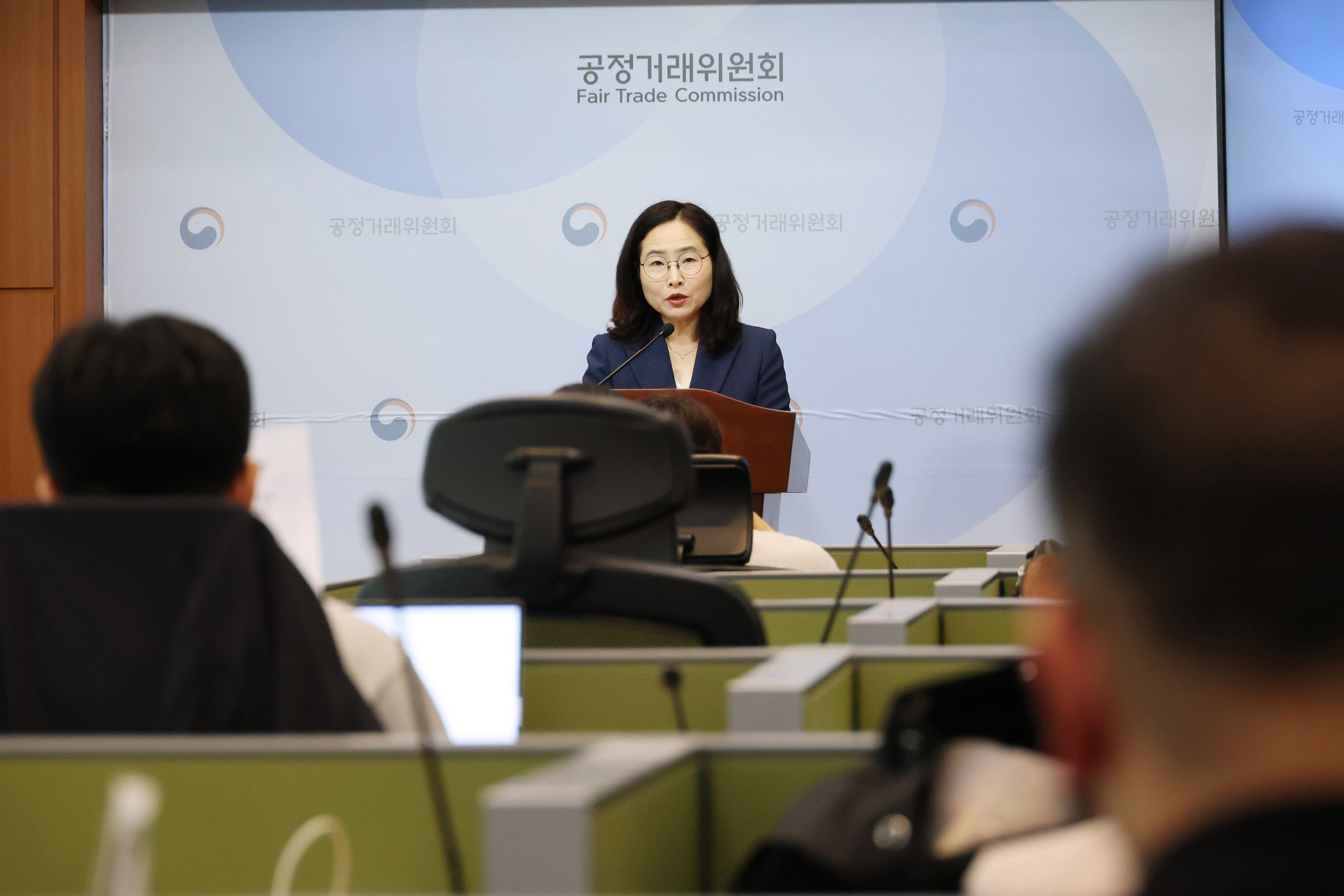
Google has encountered penalties from the Korean Fair Trade Commission (KFTC), following allegations that it pressured gaming firms to feature their titles solely on its application store. The potential financial consequences could amount to hundreds of billions or even trillions of won, depending on how severe the punishments are. Nevertheless, industry experts believe that despite possible sanctions from the KFTC, challenging Google's dominance in the app marketplace would remain a significant challenge.
As per the KFTC Secretariat, Google signed individual agreements with leading local and global gaming firms to stop them from moving away because of elevated in-app purchase commission charges (a percentage taken from transaction amounts during purchases of digital goods). These deals saw gaming companies get assistance with expenses related to cloud services, ads, YouTube, and more from Google, in return for aligning their launch schedules and content standards with or surpassing those on competing application platforms, giving preference to the Google Play Store.
The KFTC sees this method as removing justifications for gaming companies to launch on alternative application stores. Specifically, the committee believes that by structuring the support payments to rise along with Google's app store revenues, Google essentially compelled exclusivity. In South Korea's Android app marketplace, the Google Play Store has more than an 80% share of the market.
It isn't the first instance where Google engaged in such business practices. In 2023, it came to light that Google supported gaming companies under the stipulation that they wouldn’t launch their games on the local app marketplace, One Store, leading to a penalty of 42.1 billion South Korean won and an enforcement directive. This represents the second occurrence within five years of similar behavior being identified. As a result, the penalty might rise by 20–40%.
Nevertheless, the application marketplace sector thinks the KFTC penalties will not make much difference. Initially, the KFTC inquiry found that Google made $9.2178 billion (about 14.16 trillion South Korean won) in revenue solely from game offerings. Even if the KFTC applies the highest penalty, Google would just have to pay somewhere between 50.52 billion and 58.94 billion South Korean won. Legally speaking, fines might go as high as 6% of revenues (849.6 billion South Korean won), yet Google has already earned more than this sum via its dominant position in the app store market.
There are no evident rivals capable of challenging Google within the application marketplace. One Store, which struggled following Google's strong presence, was lately acquired by the gaming firm Nexseu. Established by three telecom providers along with Naver, One Store initially captured between 20-30% of the market (on Android) when it debuted in 2016, yet it currently holds just a 5-10% stake. Although it originally targeted an initial public offering projected at a valuation of one trillion South Korean won, the final selling amount came out to be merely 62.6 billion South Korean won. Up until the previous year, One Store had not achieved profitability since its inception.
Given the imbalance in the application marketplace, gaming firms benefit from launching their latest titles on the Google Play Store, which attracts a large number of users. Moreover, the widespread acceptance of user payments via the Google Play Store reinforces Google's dominant position. Despite potential penalties imposed by the Korea Fair Trade Commission, it appears improbable that these measures will substantially change Google's monopolistic framework.