
A space firm led by Elon Musk, SpaceX, is set to completely enter the mobile communication sector. The company aims to link cellphones directly with orbiting satellites to offer more than just internet connectivity, including phone conversations, message sending, and additional features.
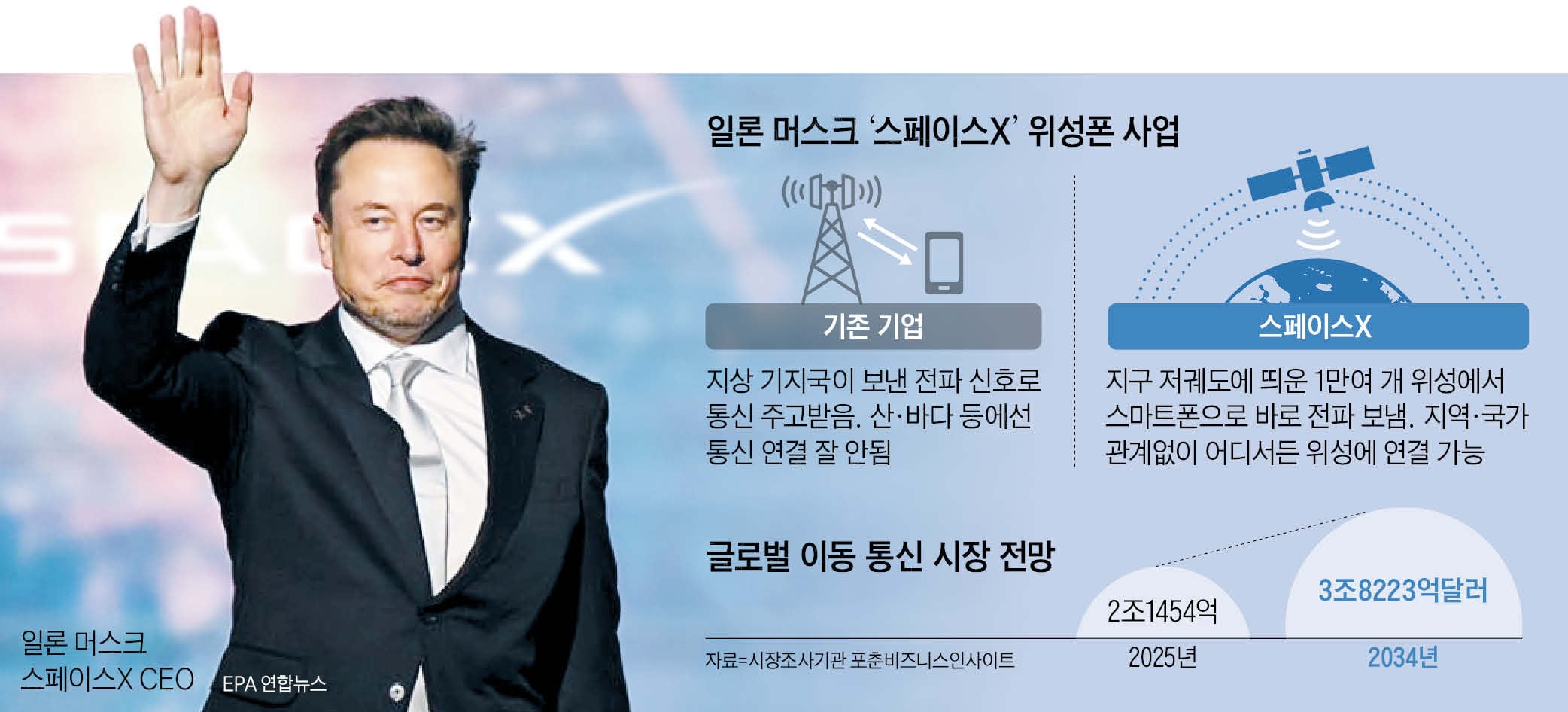
The Japanese newspaper Nikkei Shimbun published on the 1st, "SpaceX is preparing a 'Starlink Mobile' program aimed at launching additional satellites into space and connecting them directly with cell phones." Since 2019, SpaceX has been running the 'Starlink' project, which involves placing compact satellites in low Earth orbit approximately 550 kilometers up to create an online network. By the start of this year, they had deployed more than 10,000 devices and intend to increase the number to 40,000. Using this setup, the firm seeks to offer connectivity options for cellular devices outside its current satellite-based broadband service intended for households and enterprises needing individual receiving equipment. In 2023, Musk mentioned, "In the coming two years, we expect to allow smartphone use via Starlink services similar to what large telecommunications providers like AT&T do."
SpaceX started getting ready to join the mobile communications industry back in September of last year. During that period, it spent 17 billion dollars to purchase wireless communication frequencies (ranging from 2-4 GHz in the S-band) owned by American telecommunications firm EchoStar. These frequencies, which have extended wavelengths, are ideal for satellite-based communications capable of covering remote regions. It has been reported that SpaceX intends to conduct global trials of a 'satellite phone' service utilizing this frequency range before the conclusion of this year.
This offering is anticipated to cost less compared to current mobile communication options and may bring about major changes within the sector upon becoming available commercially, since it allows connection across the entire planet. Present-day worldwide mobile communications depend on ground-based towers transmitting signals to devices. This setup necessitates hundreds of thousands of such towers on land along with extensive links through fiber-optic lines. Signal loss frequently occurs in regions like mountains or at sea where coverage from these towers does not extend. On the other hand, SpaceX's satellite phones communicate directly with orbiting satellites, making it possible to make phone calls, send data, and transmit messages whenever there is an unobstructed view of the sky.
Earlier rumors on Wall Street suggested that Musk might create an AI-powered communication gadget known as the 'Tesla Phone.' Nevertheless, attention now centers more on SpaceX utilizing its satellite and space-based communication systems to step into the mobile network sector. A recent analysis from the U.S. investment firm TD Cowen stated, "The rivalry between SpaceX and leading telecommunications firms will grow stronger."
The technology sector notes that Musk intends to leverage the mobile communication business as a financial support system for extended initiatives such as colonizing Mars. In contrast to AI development, which leads to losses because of significant initial expenses, telecommunications can produce consistent income through the use of established infrastructure.
Starlink, the sole lucrative venture of SpaceX, is said to have a profit margin ranging from 63% to 65%. Last month, the number of individuals using Starlink services worldwide surpassed 12 million. According to SpaceX's latest IPO filing, "the estimated market value for the Starlink Mobile service is expected to grow to $740 billion (about 1,200 trillion South Korean won)."
A high-level representative from the aviation sector stated, "Musk's satellite-based telephone service doesn’t necessitate replacing infrastructure such as cell towers with every advancement in mobile technology. Apart from the upfront cost of launching satellites, operational expenses on the ground are almost negligible. Should this be brought to market, it has the potential to greatly challenge the current landscape of wireless communication."