

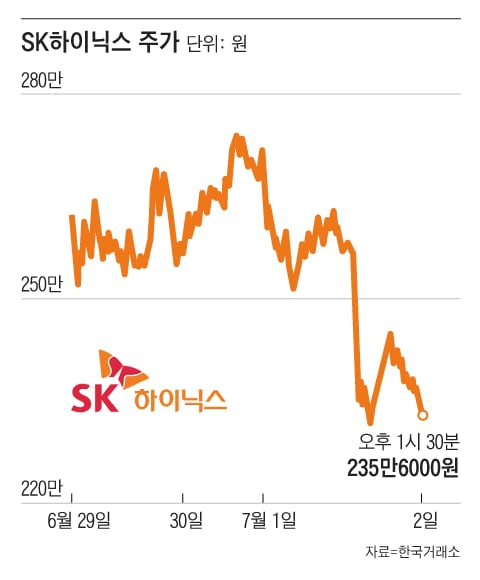
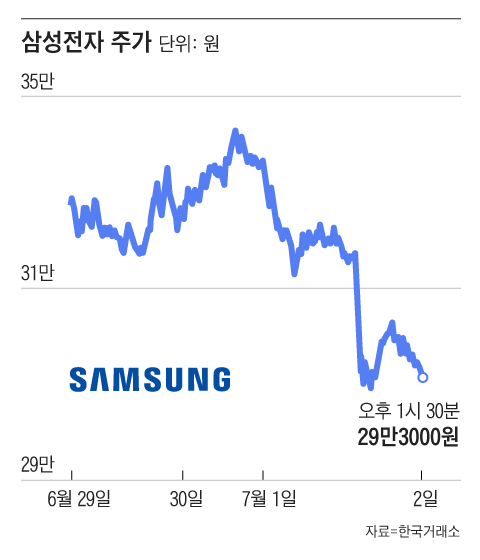
On July 1, reports revealed that Meta, the firm behind Facebook and Instagram, has entered the artificial intelligence cloud computing sector, causing fluctuations in worldwide financial markets. Although Meta's shares increased by 9%, reflecting optimism over potential new income sources, this decision raised worries regarding heavy investments in AI technology, which resulted in a drop in chipmaker stock values. This impact reached South Korea on July 2, where Samsung Electronics declined by 9.06% and SK Hynix fell sharply by 14.57%.
◇ Meta: "We will offer surplus computing capacity for sale"
On July 1, Bloomberg revealed that Meta is getting ready to launch a cloud service called "Meta Compute," aimed at offering unused computational power from its data centers to outside clients. This represents a change in direction for Meta, which had earlier concentrated on significant investments to grow its AI data centers, but is now looking to become a provider of extra AI infrastructure. Should Meta enter the cloud market, it would face direct competition from companies like Amazon (AWS), Microsoft, and Google.
Financial markets have provided mixed analyses. Some believe that Meta has shifted its position regarding large-scale AI expenditures. The firm revealed intentions to invest between $115 billion and $135 billion this year, causing uncertainty among shareholders concerning potential profits. Nevertheless, monetizing unused AI data center capabilities could convert its "unlimited investment" into a source of income. Indeed, during the May stockholder conference, CEO Mark Zuckerberg remarked, "If our AI infrastructure exceeds requirements, selling it remains a possibility."
On the flip side, others see this as evidence of "overzealous AI spending." By openly admitting to having extra computational power, Meta—known as a hyperscaler (a company managing huge data centers)—has essentially recognized excess capacity. The foundation of the current AI boom was based on the idea that "AI demand is growing faster than available supply." However, with Meta—one of the biggest companies involved—it’s now looking to sell off unused resources, leading to questions from investors: "Is the shortage really real?" and "Could demand for semiconductors drop?"
◇ Meta Surges, Semiconductor Stocks Tumble
The differing perspectives resulted in a significant increase in Meta's stock price and a decline in semiconductor-related stocks. On that particular day, Meta's share value increased almost 9 percent. At the same time, firms involved in manufacturing AI hardware experienced substantial sell-offs. Micron saw a drop of more than 10 percent, with SanDisk falling by 10.6 percent, Intel decreasing by 9.03 percent, and AMD declining by 6.89 percent. The Philadelphia Semiconductor Index ended the session lower by 6.27 percent, reaching 13,353.28 points. "Neo-cloud" businesses, which offer GPU leasing services, also witnessed declines. Both CoreWeave and Nebius recorded drops exceeding 10 percent.
◇ "Instead, a Purchase Chance"
The U.S.-based investment bank Citigroup viewed the announcement positively for Meta, maintaining its "buy" recommendation and setting a price estimate of $850. Citigroup highlighted that agreements related to computational power are worth approximately $50 billion per gigawatt (GW), indicating that Meta's revenue stream might grow, enabling significant investments in major data centers. The firm stated that this development would not lead to a decrease in demand for artificial intelligence chips.
Local specialists have also referred to the "overly high AI spending" story as exaggerated. Han Ji-young, a research analyst from Kiwoom Securities, remarked, "Meta had previously indicated plans for expanding their cloud operations during the first half of this year. Viewing this as excessive investment is somewhat misleading." She further noted, "The significant drop in shares related to artificial intelligence might present a chance to purchase." Kim Seok-hwan, another analyst with Mirae Asset Securities, commented, "Provided that exports of semiconductors keep increasing and earnings forecasts along with targeted prices continue to rise, this downturn may be considered part of normalizing valuations and liquidity; thus, unnecessary sales should be avoided."