
British people faced difficulties purchasing air conditioners today as the nation prepared for its third heatwave within six weeks following another health warning from the government.
Retail stores have run out of stock following homebuyers purchasing the units to stay comfortable during the heatwaves in May and June, which recorded the warmest days ever for those months.
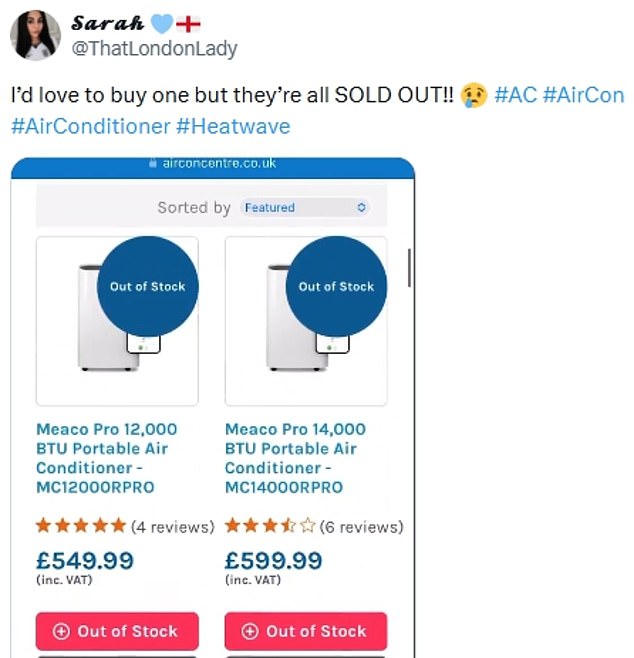
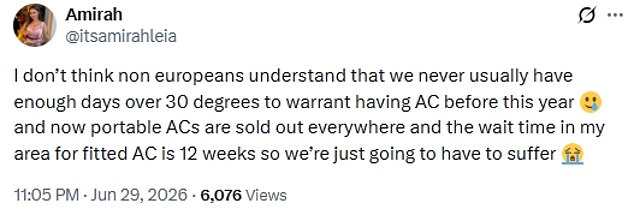
Those looking for one at the store today found themselves let down as others had purchased them all prior to the upcoming heatwave starting this weekend.
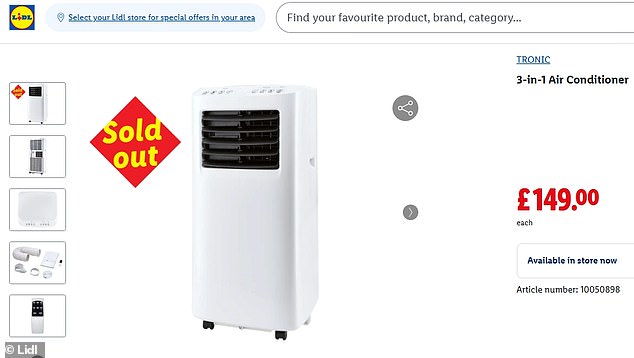
All three of the Which? top-rated products were unavailable on manufacturer sites, and the price was £150. Lidl a device that caused long lines last week remains unavailable.
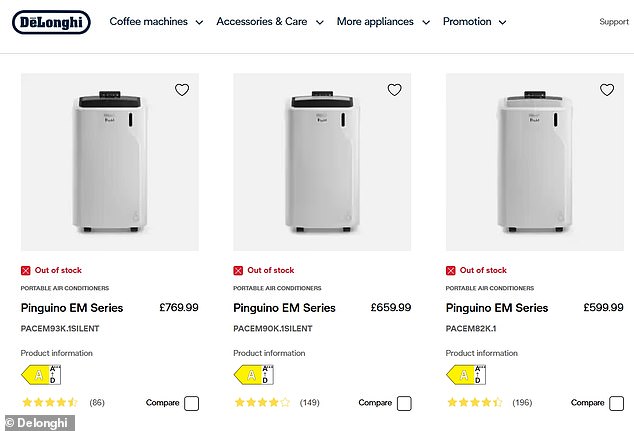
DeLonghi has sold out all nine models priced between £460 and £1,000, whereas the Currys manager cautioned that air conditioning availability remains "quite limited" before the upcoming heatwave.
Alex Baldock stated today that demand has surged, with air conditioner sales increasing by 330 percent during the most recent hot weather period compared to the previous week.
The CEO stated that Currys was "exerting tremendous effort to ensure we maintain an appropriate inventory level," and noted, "We are gaining advantages from being the leading player in the market, and if someone is going to have it, it will be us."
In France, People clashed at Lidl following the company's promise to place 200,000 fans and air conditioners on store shelves. - where customers turned violent to secure one.
Requests directed at companies specializing in air conditioning installations have increased significantly, with Aervue Air Conditioning based in Birmingham reporting that their sales have doubled since March, describing the current workload as "chaotic."
Britain experiences additional drownings and a "threat to life" amid its third heatwave of the year, following the nation's warmest May and June ever recorded.

The United Kingdom Health Security Agency (UKHSA) has raised a yellow health warning for south-eastern and eastern England along with the East Midlands region, effective from Saturday through to Wednesday.
A five-day warning highlights "a higher danger to the lives of those who are more susceptible" and indicates that "incidents involving water could rise, such as threats posed by cold water shock and submersion."
The prolonged high temperatures might lead to 'greater demand for medical care among at-risk individuals' and 'a higher likelihood of indoor spaces becoming excessively hot'.
| 1 | 40.3C | July 19, 2022 | Coningsby, Lincolnshire |
| 2 | 38.7C | July 25, 2019 | Cambridge |
| 3 | 38.5C | August 10, 2003 | Faversham, Kent |
| 4 | 38.2C | July 18, 2022 | Pitsford, Northamptonshire |
| 5 | 37.8C | July 31, 2020 | London Heathrow |
| 6 | 37.7C | June 26, 2026 | Lingwood, Norfolk |
| 7 | 37.1C | August 3, 1990 | Cheltenham, Gloucestershire |
| 8= | 36.7C | August 9, 1911 | Raunds, Northamptonshire |
| 8= | 36.7C | July 1, 2015 | London Heathrow |
| 8= | 36.7C | June 25, 2026 | Merryfield, Somerset |
Public health authorities worry about additional fatalities following at least 11 deaths from water-related accidents throughout the June heatwave — in addition to the 17 recorded during the May heatwave.
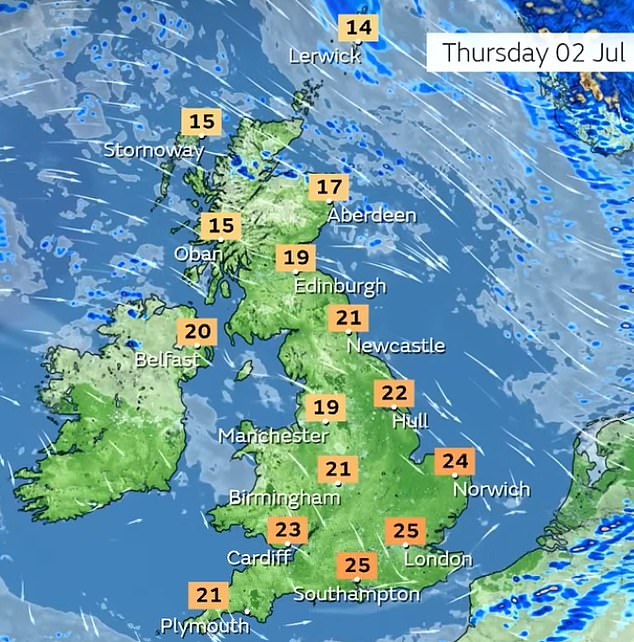
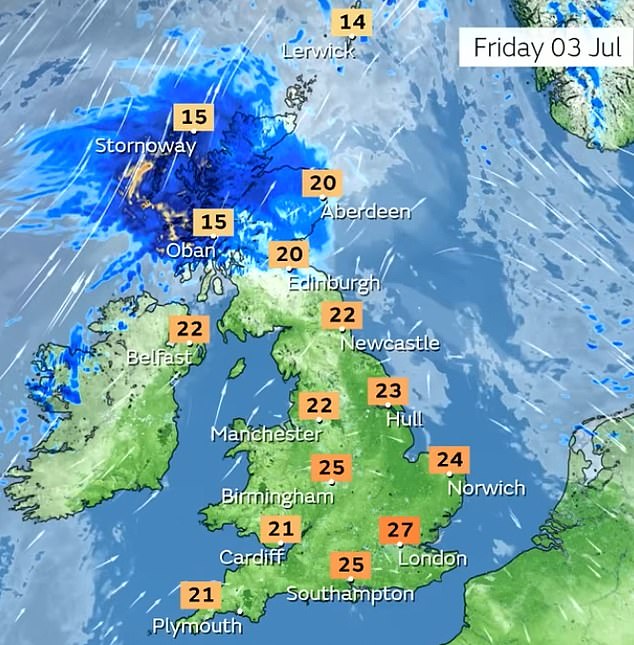
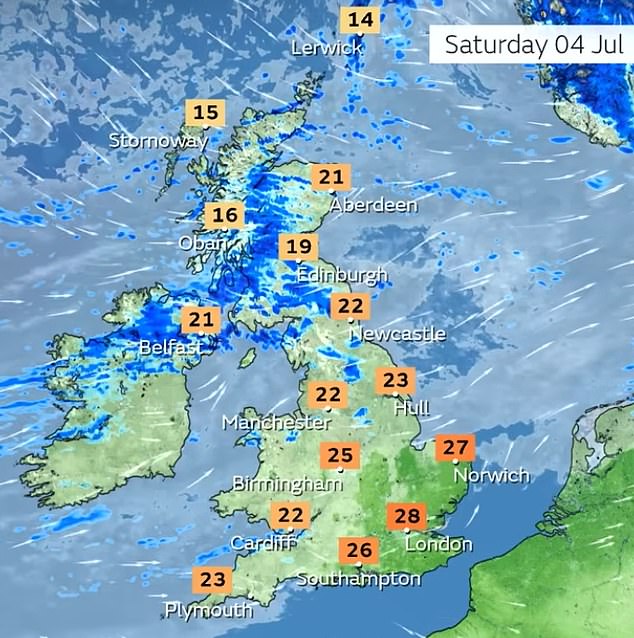
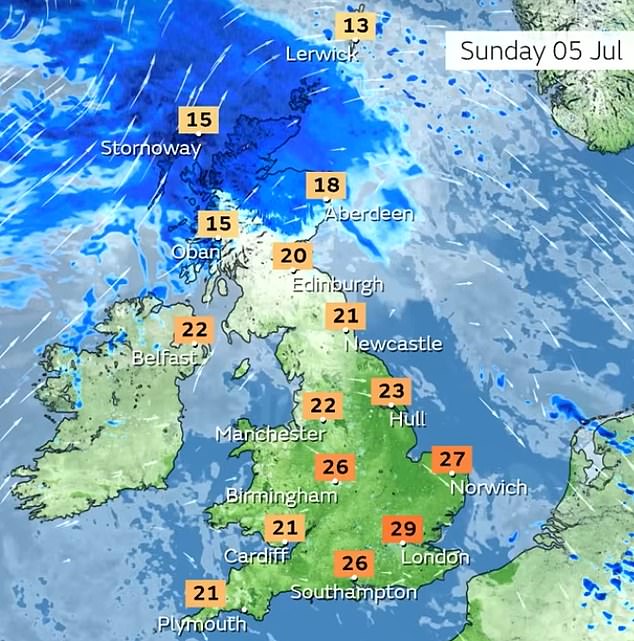
Forecasted temperatures over the coming days will remain slightly under the heatwave limit, with London experiencing high temperatures of 26°C today and tomorrow, and 27°C on Saturday.
However, 29°C is predicted in the capital on Sunday — exceeding the 28°C heatwave limit.
The temperature will reach 30C on Monday, 28C on Tuesday, and 29C on Wednesday.
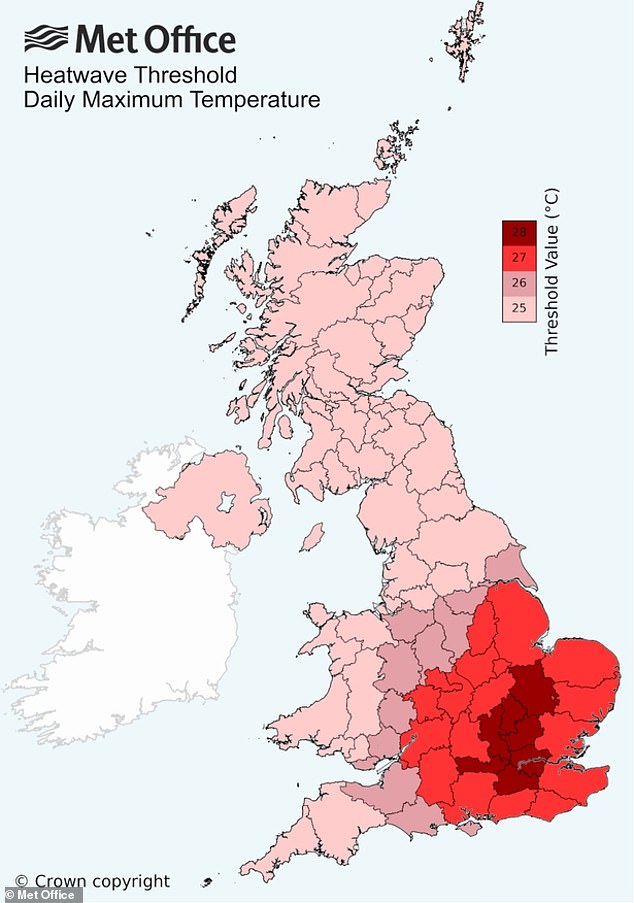
According to the Met Office, a heatwave occurs when there are three consecutive days where the highest temperature reaches or goes beyond the established heatwave limit.
The cutoff differs, being 25°C in Scotland, Northern Ireland, Wales, and southwest England, and 28°C in London along with nearby areas.
The day is expected to bring scattered rainfall that will move out of the southern regions, followed by periods of sunshine in other areas, while the Northeast remains windy.
Uncertain weather conditions are anticipated starting tomorrow in the northern region, although the temperature is predicted to become more temperate toward the southern areas.
Meteorologist Annie Shuttleworth from the Met Office stated that a region of high pressure forming from the Azores will "control our weather for at least most of next week, resulting in lots of dry, stable, and bright conditions."

She said: "The weather will gradually get warmer each day, as high-pressure systems remain stable. However, due to westward winds, temperatures are unlikely to reach the highs recorded during the June heatwave."
And it's also not quite as warm in the western parts of Europe as the heatwave has moved towards the eastern regions.
Although we anticipate hot weather conditions to emerge across the UK at the start of next week, mainly in the south, we do not expect the extremely high temperatures observed during late June.
Allergy UK has cautioned individuals who suffer from asthma or hay fever that they may face "thunderstorm asthma." This condition happens during stormy weather when strong winds carry pollen and pollutants into the air, which can then be breathed deeply into the lungs, leading to or aggravating asthmatic reactions.
Amena Warner, who leads clinical services at the organization, stated: "Most individuals suffering from hay fever will encounter their typical set of symptoms—sneezing, a stuffy nose, and irritated eyes—but these will be significantly worse."
Nevertheless, more concerning is that hay fever may lead to aggravated asthma symptoms, and stormy weather can turn minor issues into serious problems, like trouble breathing and tightness in the chest.
It’s crucial for those experiencing asthma and seasonal allergies to stay proactive and consistent with their treatment plans to control their symptoms effectively.
Individuals facing trouble with their breath must promptly consult a healthcare professional.
The organization mentioned that individuals can lower the dangers associated with thunderstorm asthma by remaining inside before, throughout, and following the storm, using a face mask when outside to minimize contact with pollen, adhering to their regular treatment, carrying an emergency inhaler at all times, and watching for signs of worsening asthma.
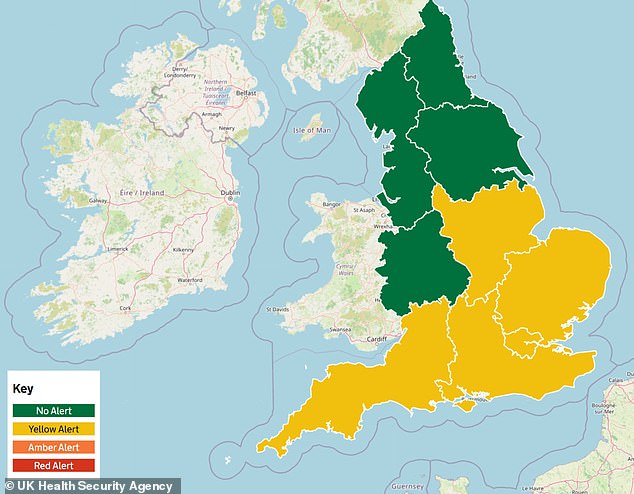
A recent warning from the UK Health Security Agency follows an intense heatwave earlier this week, when the Meteorological Office released a uncommon red alert for severe heat across certain areas, and the UKHSA activated red-level heat health warnings.
The United Kingdom established an initial high-temperature record of 37.7°C on Friday at Lingwood in Norfolk, as reported by the Met Office.
It surpasses the earlier June high in the UK of 35.6°C from 1976 by over 2°C.
Also last week, the UK experienced two of its top ten highest temperature days ever recorded — one reaching 37.7°C and another hitting 36.7°C at Merryfield in Somerset on Thursday.
Furthermore, last month was temporarily recorded as the hottest June in England since measurements started, along with being the second-hottest for the entire United Kingdom.
England experienced an average temperature of 17.1°C for the month, surpassing the prior June high of 16.9°C recorded last year.
This indicates that England's three hottest Junes ever recorded, starting from when records began in 1884, have all taken place within this decade, with 2026 ranking highest, followed by 2025, and 2023 coming in third at 16.7°C.
The average temperature throughout the UK reached 15.6°C, coming second only to 15.8°C recorded in 2023.
Last month also marked a temporary new high for the highest nighttime low in June, as temperatures at Cardiff Bute Park did not fall below 23.5°C on June 25.
The current year has also recorded the warmest May temperature ever, reaching 35.1°C on May 26 at Kew Gardens in London.
Both England and Wales recorded their hottest spring ever in 2026, partially due to the heatwave at the end of May.
Read more