
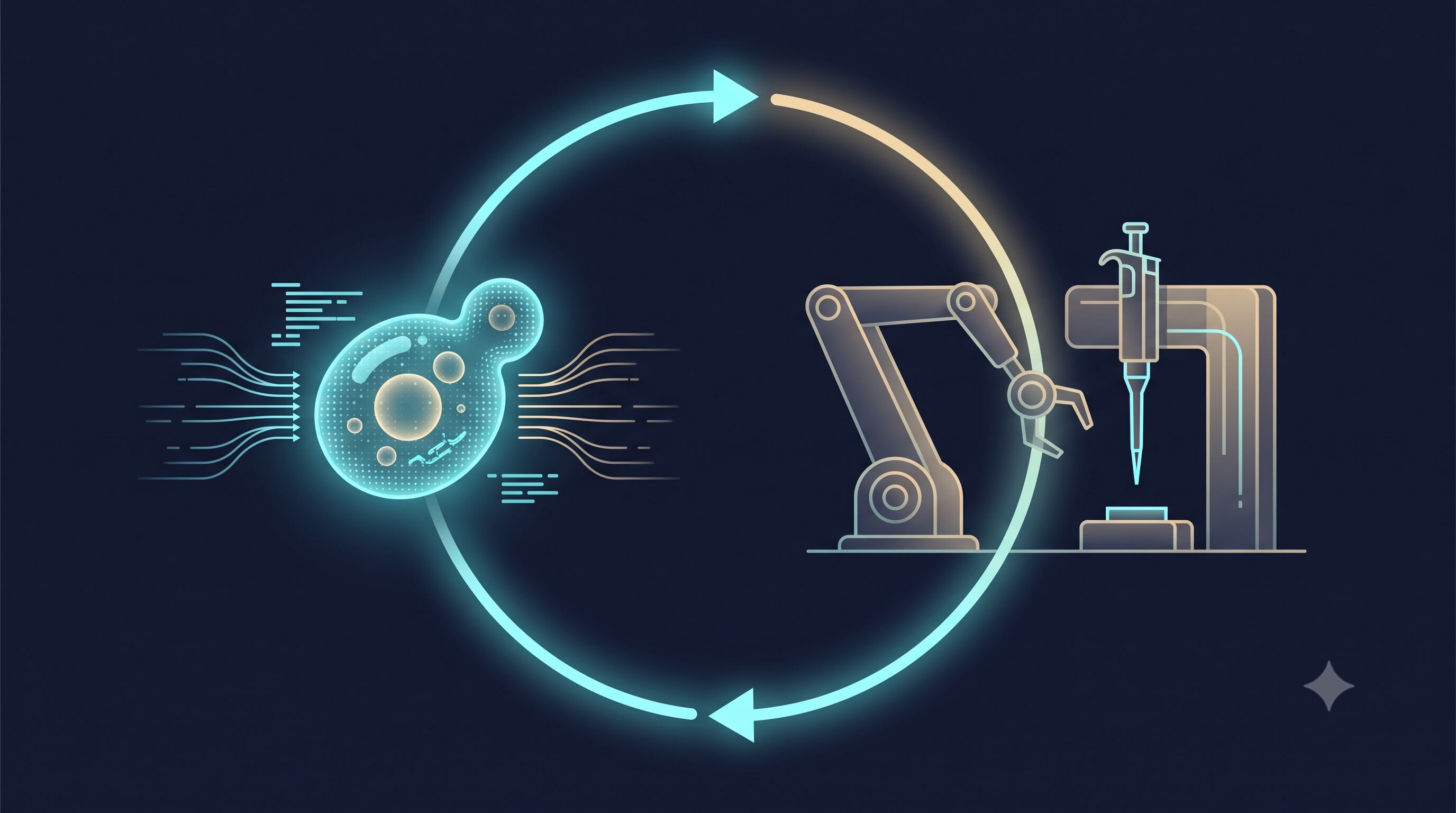
After the AI-based protein structure prediction tool AlphaFold, studies focused on "virtual cells," which mimic all movements of living cells within computers, are becoming more active. The initial example is a "virtual yeast" AI system capable of forecasting internal cellular changes when genes are modified or medications are applied. A major global initiative aimed at modeling essential yeast cell processes through AI has recently been announced.
A global group of researchers from Zhejiang University (China), Stanford University (United States), the University of Toronto (Canada), and ETH Zurich (Switzerland) released a guide in *Nature* on July 2 outlining the approach to building a "digital yeast." This initiative aims to combine elements such as yeast genetics, protein functions, metabolic activities, and cell structure to forecast biological events. The publication does not present an experiment showcasing the successful creation of a digital yeast; rather, it serves as a viewpoint piece detailing the necessary data, artificial intelligence framework, and automated testing mechanisms needed for this endeavor.
◇ A "Artificial Intelligence Team Lead" Managing 8 Departments
The "virtual yeast" that the research group intends to create goes beyond being just a 3D representation of a cell displayed on a computer. Instead, it is an artificial intelligence system designed to forecast changes in protein and metabolite concentrations, along with cellular growth rates, as certain genes are deleted or factors such as nutrition, temperature, or medication are modified.
The experimental organism selected for this study is baker's yeast, a unicellular eukaryote commonly utilized in bread-making and beer production. Despite being only 3–10 micrometers (μm) in diameter, it possesses all fundamental eukaryotic components: a nucleus, mitochondria, endoplasmic reticulum, and Golgi complex.
The suggested "virtual cell" framework doesn't depend on one powerful AI managing every task. Rather, the group split cellular processes into eight distinct modules (including genetics, metabolic activity, energy management, and stress reactions), with each handled by an individual AI. A major language model (MLM) serves as the central coordinator. For instance, if someone questions, "In what ways do nuclear and mitochondrial operations alter under conditions of poor nutrition?" the MLM identifies appropriate specific AIs to examine and combine findings.
◇ "When Doubtful, Develop and Confirm" – AI Creating Experiments
At the heart of the virtual yeast is its feedback mechanism, wherein trials and simulations continuously enhance forecasts. If the artificial intelligence detects ambiguous genetic or external factors, robotic laboratory tools grow actual yeast in these situations and examine the outcomes. The updated information is subsequently used to boost the AI's forecasting accuracy. This method minimizes the quantity of tests required to grasp intricate cell reactions when contrasted with conventional hands-on setting configurations.
To develop the preliminary training data, the group chose 12 yeast strains that were both genetically and functionally varied out of a total of 969 strains. They used more than 200 different experimental setups—including changes in carbon and nitrogen sources, temperature, and chemical agents—to produce over 15,000 proteomic datasets, 5,000 metabolomic readings, and 2,500 growth profiles at various time intervals.
◇ "A Virtual Yeast Project Aims for Completion in 5 to 10 Years"
The group expects that virtual yeast could be utilized to create customized yeast strains for generating biofuels and producing medicines, discover potential drug targets, and investigate processes related to cellular aging. Nevertheless, the first version is expected to concentrate on forecasting particular activities such as metabolic functions or responses to stress instead of developing an exact digital replica of the whole cell. They believe it may require between 5 to 10 years to combine all functionalities into a unified virtual yeast model.
Techniques proven effective in virtual yeast may eventually be used to forecast how human cells respond. The researchers anticipate uses in synthetic biology and identifying potential drug targets.