
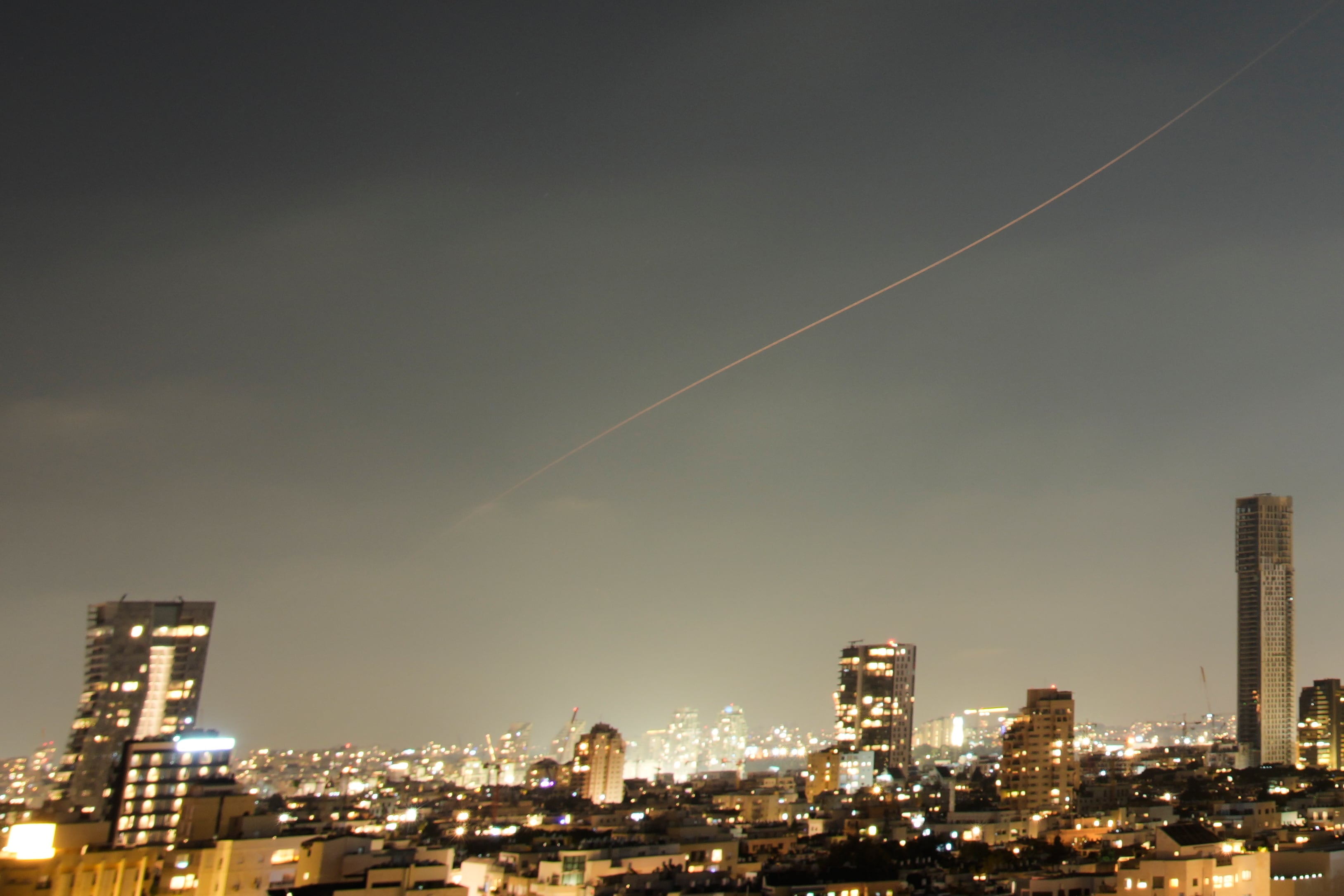
On the 7th (local time), Iran fired ballistic missiles aimed at northern Israel as an act of revenge for an Israeli aerial strike on Beirut, the capital of Lebanon. The Israeli military detected two missile launches from Iran occurring every 15 minutes during the evening and reported that their air defense systems successfully intercepted them. This represents the initial assault by Iran against Israeli soil since the truce between the United States and Iran came into force on April 8th of last year.
Israeli regional news outlets reported that Iran fired around 10 ballistic missiles towards Israel on that day. The Iranian Islamic Revolutionary Guards Corps mentioned, "The air force launched ballistic missiles aimed at Israel's Ramat David Airbase," and noted, "This night's action is just a cautionary measure. Should hostilities persist, we will react far more broadly."
The headquarters of Khatam al-Anbiya, responsible for directing the Iranian armed forces, released a declaration right after the missile attack, saying, "In spite of previous alerts from the Islamic Republic of Iran, the Zionist entity has exceeded every boundary, escalated assaults on southern Lebanon, and struck the Dahiyeh district of Beirut."
It stated, "The military of the Zionist regime should immediately stop attacking southern Lebanon and Dahiyeh," further noting, "Should the attacks increase or be met with retaliation, they will encounter even more damaging and severe strikes." A high-ranking Iranian representative also informed Reuters, "If Israel persists with its assaults, every U.S. military base in the area could become a valid target for Iran's actions."
Following Iran's missile test, alarms were activated in northern Israel and Jordan, although the Times of Israel noted no injuries, downed rockets, or physical destruction so far. The Israeli Defense Forces' Home Front Command, similar to a civilian protection office, mandated school shutdowns across all northern areas.
Israeli Prime Minister Benjamin Netanyahu quickly held a security consultation session, with Channel 12 reporting, based on information from an high-ranking source, that he plans to retaliate vigorously against Iran's missile strike.
On the same day earlier, the Israeli army said, "As a response to Hezbollah's assault on Israeli land, the Israeli forces bombed a 'terrorist' command center situated in the southern part of Beirut, Lebanon." Dahiya, which lies in the southern area of Beirut and was hit by the air strike, serves as a major base for the Iran-backed militant group Hezbollah. According to the Lebanese Health Department, at minimum two individuals lost their lives and 20 others sustained injuries due to the Israeli military's aerial bombardment.
Later, Mohammad Bagher Ghalibaf, the head of parliament who previously headed Iran's negotiating delegation, sharply criticized Israel's air strike on the Lebanese capital, Beirut, and suggested possible revenge.
In a telephone conversation with a Fox News journalist on that same day, U.S. President Donald Trump encouraged Iran not to increase tensions over the missile attack directed at Israel. According to reports from Fox News, President Trump conveyed to Iran, "You have launched your missiles; now cease."